
.svg)

Many marketers blame creative or budget when PPC campaigns underperform, but the real culprit is often measurement. Tracking gaps, consent limitations, and inconsistent conversion data skew performance insights, leading to wasted spend and poor optimization decisions. Analytics transforms raw campaign data into actionable intelligence, enabling real-time adjustments, accurate attribution, and AI-powered optimizations. This guide reveals how to leverage analytics to maximize advertising ROI, reduce customer acquisition costs, and make data-driven decisions that drive measurable results in 2026.
Table of Contents
- Why Analytics Is Critical In Modern Advertising
- Harnessing Real-Time Analytics To Optimize Ad Performance
- The Transformative Role Of AI And Unified Data In Marketing Optimization
- Navigating Attribution Challenges To Refine Advertising Strategies
- Optimize Your Advertising With Expert Analytics Consulting
- Frequently Asked Questions
Key takeaways
| Point | Details |
|---|---|
| Real-time analytics enables agile optimization | Instant bid adjustments and budget reallocations capture market opportunities and prevent wasted spend. |
| AI-driven insights boost ROAS significantly | Machine learning algorithms continuously optimize targeting, bidding, and budget allocation to improve returns. |
| Multi-touch attribution reveals true channel value | Tracking all customer touchpoints across devices prevents misleading last-click biases and improves budget allocation. |
| Unified data eliminates siloed decision-making | Centralized analytics platforms uncover cross-channel insights and hidden optimization opportunities. |
| Ongoing tracking maintenance prevents data drift | Continuous monitoring and validation ensure conversion signals remain accurate for algorithmic optimization. |
Why analytics is critical in modern advertising
Many PPC accounts do not have an ad problem. They have a measurement problem. This reality explains why campaigns with strong creative and competitive budgets still deliver unstable results. Tracking gaps emerge from user consent limitations, browser restrictions, and technical configuration errors that distort conversion data.
Smart Bidding algorithms depend on accurate conversion signals to optimize bids and placements. When tracking flaws feed incomplete or incorrect data into these systems, automated strategies make poor decisions that waste budget and miss opportunities. The algorithm cannot distinguish between genuine performance shifts and measurement artifacts, leading to constant optimization churn without meaningful improvement.
Maintaining tracking systems requires ongoing vigilance, not one-time setup. Cookie deprecation, platform updates, consent management changes, and website modifications constantly introduce new measurement challenges. Regular audits catch configuration drift before it corrupts decision-making data.
Common measurement issues include:
- Inconsistent conversion tracking across devices and sessions
- Missing server-side tracking for consent-blocked browser events
- Misconfigured attribution windows that exclude critical touchpoints
- Duplicate conversion counting inflating performance metrics
- Campaign tagging errors preventing accurate source attribution
Pro Tip: Schedule quarterly conversion tracking audits to validate data accuracy before major budget allocation decisions. Test key conversion paths manually across browsers and devices to catch tracking gaps that automated monitoring misses.
Reliable analytics eliminates guesswork by providing clear visibility into what drives results. This foundation enables every subsequent optimization strategy, from budget allocation to creative testing, ensuring decisions stem from facts rather than assumptions. When you optimize ad campaigns for ROI, measurement accuracy determines whether those optimizations succeed or fail.
Harnessing real-time analytics to optimize ad performance
Real-time analysis in ad performance tracking allows advertisers to make split-second decisions about ad placement, targeting, and bidding to capture opportunities and respond to market changes. Modern architectures process billions of events per hour, delivering insights at millisecond latency that enable immediate optimization actions.
The technical foundation combines three core components:
- Redpanda for high-throughput event ingestion handling millions of impressions and clicks per second
- Apache Flink for stream processing that enriches events and detects patterns in real time
- Apache Pinot for OLAP queries delivering sub-second analytics across dimensional slicing
This infrastructure powers instant detection of performance shifts. When a specific audience segment suddenly converts at twice the normal rate, real-time systems automatically increase bids for that segment before competitors notice the opportunity. Conversely, when click-through rates plummet for certain placements, immediate budget reallocation prevents continued waste on underperforming inventory.
Fraud detection benefits enormously from real-time capabilities. Analyzing click patterns, device fingerprints, and conversion timing as events occur identifies invalid traffic before it consumes significant budget. Blocking fraudulent sources within seconds rather than days protects campaign performance and preserves spend for genuine prospects.
“Speed, reliability, and accuracy are key objectives when building a system for real-time ad performance tracking. These factors directly impact the ability to make informed decisions quickly and maintain competitive advantage in dynamic advertising environments.”
The Sandbox-GTM real-time advertising analytics system demonstrates how modern platforms translate streaming data into actionable dashboards. Marketers see performance metrics update continuously, eliminating the frustrating wait for batch processing that characterized legacy analytics tools.
Real-time insights compound when you measure ad performance for higher ROI, because faster detection of optimization opportunities directly correlates with captured value before market conditions shift.

The transformative role of AI and unified data in marketing optimization
AI-powered marketing optimization can significantly improve ROAS and reduce customer acquisition costs by continuously analyzing aggregated data to refine bidding strategies, targeting parameters, and budget allocation across channels. Machine learning algorithms identify patterns human analysts miss, discovering non-obvious correlations between audience attributes, creative elements, and conversion likelihood.
Unified data sources are foundational for effective marketing optimization because siloed analytics prevent holistic understanding. When Google Ads, Meta, LinkedIn, and organic search data remain separated, you miss cross-channel attribution insights and duplicate efforts targeting the same prospects through different platforms.
Centralized data platforms aggregate metrics from all marketing touchpoints into single-source-of-truth repositories. This consolidation reveals how paid search awareness campaigns influence social media conversion rates, or how email nurture sequences improve retargeting performance. Previously invisible relationships emerge from unified datasets, unlocking optimization strategies that isolated channel analysis never surfaces.
Marketing optimization is iterative, requiring continuous measurement, testing, and refinement rather than one-time fixes. AI accelerates this cycle by automatically testing thousands of variable combinations and learning from results faster than manual experimentation allows.
Follow these steps to integrate AI analytics for maximum impact:
- Consolidate all marketing data sources into a unified analytics platform with consistent conversion definitions and attribution logic
- Define business-impact metrics (ROAS, CAC, Customer Lifetime Value) as primary optimization targets rather than vanity metrics like impressions
- Implement AI-powered bidding strategies on platforms supporting machine learning, starting with campaigns having sufficient conversion volume
- Establish automated alerts for statistically significant performance changes that require human review before algorithmic adjustments
- Create feedback loops where offline conversion data (sales, renewals, LTV) enriches online campaign optimization signals
- Schedule monthly reviews comparing AI-optimized performance against control groups to validate improvement and identify algorithm limitations
Pro Tip: Maintain rigorous data hygiene by regularly cleaning customer databases, standardizing naming conventions, and validating data imports. AI algorithms amplify the quality of their training data, so errors and inconsistencies produce unreliable predictions that undermine optimization efforts.
Understanding the role of AI in marketing CTR growth and maximizing AI in PPC bidding requires recognizing that algorithms enhance human strategy rather than replacing it. You provide business context, competitive intelligence, and strategic direction that machine learning applies at scale with inhuman speed and consistency.
Navigating attribution challenges to refine advertising strategies
Consumers engage through 5 to 10+ touchpoints across devices and channels before purchasing, creating complex customer journeys that simple attribution models misrepresent. A prospect might discover your brand through a YouTube ad, research on mobile during their commute, compare options via desktop search, and finally convert through a retargeting email on tablet. Assigning credit accurately across this journey determines whether you invest in channels driving actual results or those merely capturing existing demand.
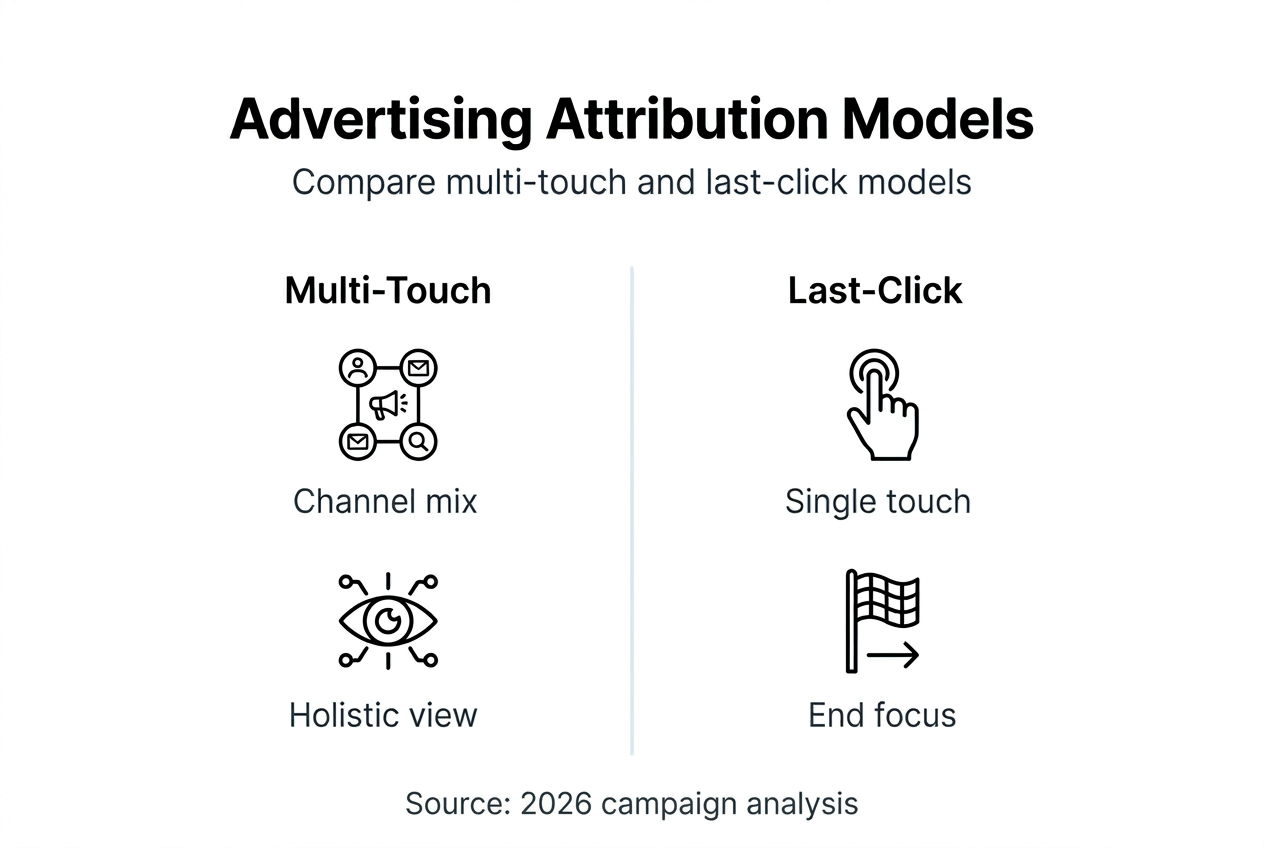
Last-touch attribution undervalues awareness-building channels and biases investment toward end-of-funnel tactics by crediting only the final interaction before conversion. This approach systematically under-invests in top-of-funnel channels like display advertising, video campaigns, and social awareness efforts that initiate customer journeys but rarely close them directly.
Last-click attribution undervalues top-of-funnel marketing while overvaluing bottom-funnel channels, creating a self-fulfilling prophecy where awareness budgets shrink due to apparent low performance, reducing pipeline volume that bottom-funnel tactics convert.
Multi-touch attribution assigns credit across interactions, improving budget allocation by recognizing how channels work together throughout the customer journey. This holistic view reveals which awareness channels feed the highest-quality prospects to conversion tactics, enabling strategic investment that grows total pipeline rather than merely optimizing conversion of existing demand.
| Attribution Model | Advantages | Disadvantages | Best Use Cases |
|---|---|---|---|
| Last-touch | Simple implementation, clear conversion path, easy to explain to stakeholders | Ignores awareness and consideration touchpoints, biases toward bottom-funnel | Short sales cycles, single-channel campaigns, quick directional insights |
| Multi-touch (linear) | Credits all touchpoints equally, recognizes full journey, reveals channel interactions | May overweight insignificant touchpoints, requires sophisticated tracking | Complex B2B journeys, multiple channel strategies, understanding awareness impact |
| Multi-touch (time decay) | Emphasizes recent interactions while acknowledging earlier touchpoints, balances awareness and conversion credit | Complexity in weight selection, still somewhat arbitrary | Long consideration cycles, nurture-heavy strategies, balanced funnel investment |
| Data-driven attribution | Uses machine learning to assign credit based on actual conversion likelihood, adapts to your specific patterns | Requires significant conversion volume, black-box methodology, platform-specific limitations | High-volume campaigns, mature analytics infrastructure, optimization-focused teams |
Implementing multi-touch attribution requires:
- Cross-device identity resolution connecting touchpoints across platforms and sessions
- Campaign tagging consistency enabling accurate source tracking throughout the journey
- Attribution modeling tools processing interaction data and assigning credit weights
- Organizational alignment on shared conversion definitions across channel teams
- Regular model validation comparing attributed performance against holdout test groups
Challenges include data fragmentation from walled gardens, consent limitations reducing trackable touchpoints, and computational complexity processing billions of interaction combinations. Despite these obstacles, improved attribution accuracy justifies the investment by preventing systematic misallocation of marketing budgets.
When you optimize ad campaigns for ROI, attribution model selection fundamentally shapes which optimizations appear effective and which channels receive investment priority.
Optimize your advertising with expert analytics consulting
Transforming analytics insights into measurable campaign improvements requires specialized expertise that bridges technical measurement capabilities with strategic advertising execution. AdVenture Media’s consulting services focus on analytics-driven optimization frameworks that identify hidden opportunities and eliminate wasteful spending.
Our proven methodologies delivered 35% monthly SEM cost savings for Alludo Software by restructuring campaign analytics to reveal underperforming segments and reallocation opportunities that previous analyses missed. We combine deep platform expertise with rigorous data analysis to diagnose measurement issues, implement accurate tracking, and optimize campaigns based on reliable performance signals.
Whether you’re struggling with inconsistent conversion data, seeking to implement advanced attribution models, or looking to leverage AI-powered optimization more effectively, our team provides the strategic guidance and technical execution that turns analytics potential into advertising results. Contact our advertising optimization experts today to discuss how analytics-focused consulting can reduce your acquisition costs while improving campaign performance.
Frequently asked questions
What is the role of analytics in advertising?
Analytics transforms raw campaign data into actionable insights that guide budget allocation, targeting refinement, and creative optimization. It reveals which channels, audiences, and messages drive actual business results rather than vanity metrics. By measuring true performance and identifying optimization opportunities, analytics directly impacts ROI and prevents wasteful spending on ineffective tactics.
How does real-time analytics improve ad campaign performance?
Real-time analytics enables immediate response to performance shifts, capturing opportunities before competitors and stopping underperforming spend within seconds rather than days. This agility prevents budget waste on declining placements while maximizing investment in suddenly effective segments. Faster detection of fraud, technical issues, and market changes compounds into significantly better overall campaign efficiency.
Why is multi-touch attribution better than last-click attribution?
Multi-touch attribution recognizes that customers engage through multiple touchpoints before converting, accurately crediting awareness and consideration channels that last-click models ignore. This comprehensive view prevents systematic under-investment in top-of-funnel activities that generate pipeline, leading to better budget allocation across the entire customer journey. Organizations using multi-touch attribution typically discover 20 to 40% of their conversion credit belongs to previously undervalued channels.
What data should be unified for effective marketing optimization?
Unify all paid advertising platforms (Google, Meta, LinkedIn, display networks), organic search analytics, email marketing metrics, CRM data, and offline conversion information into a single centralized repository. Include customer demographic data, engagement history, and lifetime value calculations to enable sophisticated segmentation and predictive modeling. The more comprehensive your unified dataset, the more optimization opportunities AI algorithms can discover through cross-channel pattern recognition.
How often should conversion tracking be audited?
Conduct comprehensive conversion tracking audits quarterly at minimum, with focused validation monthly for high-spend campaigns. Schedule audits immediately after major website changes, platform updates, consent management modifications, or unexplained performance shifts. Between formal audits, implement automated monitoring that alerts you to sudden conversion rate changes, tracking volume drops, or data quality anomalies requiring investigation.
Can small businesses benefit from advanced analytics in advertising?
Small businesses gain proportionally more value from analytics because limited budgets make waste elimination critical and smaller conversion volumes require more efficient optimization. Start with foundational tracking accuracy and basic attribution models before advancing to AI-powered tools and multi-touch attribution as conversion volume grows. Even simple analytics implementations prevent common budget-draining mistakes like targeting wrong audiences or continuing underperforming campaigns too long.
Recommended

.avif)

PictureFrames.com Sees Profitable Ecommerce Sales Growth Year Over Year


Remarketing Campaigns Give Celebrity-Favorite Luxury Jewelry Brand 12X ROI


Implementation of Google’s Latest Targeting Features Increases a Telehealth Company’s YoY New Users by 96%
Request A Marketing Proposal
We'll get back to you within a day to schedule a quick strategy call. We can also communicate over email if that's easier for you.
Visit Us
New York
1074 Broadway
Woodmere, NY
Philadelphia
1429 Walnut Street
Philadelphia, PA
Florida
433 Plaza Real
Boca Raton, FL
General Inquiries
info@adventureppc.com
(516) 218-3722
AdVenture Education
Over 300,000 marketers from around the world have leveled up their skillset with AdVenture premium and free resources. Whether you're a CMO or a new student of digital marketing, there's something here for you.
OUR BOOK
We wrote the #1 bestselling book on performance advertising
Named one of the most important advertising books of all time.
buy on amazon
OUR EVENT
DOLAH '24.
Stream Now.
Over ten hours of lectures and workshops from our DOLAH Conference, themed: "Marketing Solutions for the AI Revolution"
check out dolah
The AdVenture Academy
Resources, guides, and courses for digital marketers, CMOs, and students. Brought to you by the agency chosen by Google to train Google's top Premier Partner Agencies.
Bundles & All Access Pass
Over 100 hours of video training and 60+ downloadable resources
 view bundles →
.png)


