
.svg)
Digital Marketing Planning Process: Achieve Measurable Growth

Nearly 80 percent of American marketing managers say their current PPC campaigns are not delivering consistent growth. With budgets under scrutiny and business goals shifting rapidly, defining the right objectives from the very first step becomes essential. This guide shares how a thorough assessment of your digital marketing performance and clearly aligned objectives can set the stage for measurable gains in every American tech company’s PPC strategy.
Table of Contents
- Step 1: Assess Current Performance And Define Objectives
- Step 2: Analyze Audience Insights And Competitive Landscape
- Step 3: Develop Strategic Campaign Frameworks
- Step 4: Implement Targeted Actions Across Platforms
- Step 5: Measure Results And Optimize For Improvement
Quick Summary
| Key Point | Explanation |
|---|---|
| 1. Assess Current Performance | Conduct a digital marketing audit to evaluate existing strategies and identify metrics like conversion rates and engagement levels. |
| 2. Define Specific Objectives | Set SMART objectives tied to business outcomes, such as increasing lead generation or improving customer acquisition costs. |
| 3. Analyze Audience and Competitors | Use analytics to segment your target audience and conduct competitor analysis for strategic positioning and opportunity identification. |
| 4. Develop Strategic Campaigns | Create a flexible campaign framework that aligns with your marketing goals and integrates multiple digital channels while being ready to adapt. |
| 5. Measure and Optimize Results | Establish a measurement system to analyze performance metrics continually, allowing for data-driven adjustments and iterative improvements. |
Step 1: Assess Current Performance and Define Objectives
Successful digital marketing planning begins with a comprehensive performance assessment. In this critical first step, you will evaluate your current marketing efforts and establish clear strategic objectives that align with your business goals.
Start by conducting a detailed digital marketing audit that examines your existing marketing channels, campaigns, and key performance indicators. Gather historical performance data across platforms like search, social media, email, and advertising. Look for specific metrics such as conversion rates, click through rates, engagement levels, and return on ad spend. Pay special attention to which campaigns delivered the best results and which underperformed.
Next, analyze your data through a strategic lens. Marketing performance measurement systems must align metrics with organizational strategy, so focus on understanding not just the numbers, but what they mean for your broader business objectives. Identify opportunity gaps where your current marketing efforts are falling short. Are you reaching the right audience? Is your messaging resonating? Are your marketing investments generating adequate returns?
Once you have a clear picture of your current performance, define specific, measurable objectives for your digital marketing strategy. These should be concrete goals that are directly tied to business outcomes - like increasing lead generation by 25%, improving customer acquisition cost, or expanding market share in a particular segment. Ensure each objective is SMART: Specific, Measurable, Achievable, Relevant, and Time-bound.
Here’s a summary of SMART objective elements for digital marketing planning:
| SMART Criteria | Explanation | Digital Marketing Example |
|---|---|---|
| Specific | Clearly defined and focused goal | Increase newsletter signups |
| Measurable | Quantifiable achievement criteria | Achieve 5,000 new signups |
| Achievable | Realistically attainable target | Based on current conversion rates |
| Relevant | Directly contributes to business aims | Drives qualified leads to sales |
| Time-bound | Deadline for completion | Within the next quarter |
Pro tip: Create a visualization dashboard that tracks your key performance metrics in real time, enabling quick insights and agile strategy adjustments.
Step 2: Analyze Audience Insights and Competitive Landscape
In this critical step, you will dive deep into understanding your target audience and the competitive environment that shapes your digital marketing strategy. Your goal is to develop nuanced insights that will inform precise targeting and strategic positioning.
Begin by understanding and segmenting your target audience using advanced digital analytics tools. Leverage platforms like Google Analytics to create detailed buyer personas that reveal specific user behaviors, demographic characteristics, and engagement patterns. Examine metrics such as age, location, browsing habits, purchase history, and interaction frequency across different digital channels.
Simultaneously, conduct a comprehensive competitor analysis that examines similar brands in your market space. Investigate their marketing strategies, product offerings, branding approaches, and customer journeys. Look for gaps in their strategies that could represent opportunities for your own differentiation. Analyze their strengths and weaknesses to understand industry standards and identify potential niches where you can create unique value.
Cross reference your audience insights with competitive intelligence to develop a sophisticated marketing approach. Match your audience segments with competitive positioning strategies that highlight your unique strengths. Create targeted messaging and campaign approaches that speak directly to specific user needs while differentiating yourself from competitors.
Pro tip: Utilize social listening tools to track real time conversations about your brand and competitors, gaining unfiltered insights into audience perceptions and market sentiments.
Step 3: Develop Strategic Campaign Frameworks
Developing strategic campaign frameworks is about creating a comprehensive blueprint that transforms your marketing objectives into actionable, measurable tactics across multiple digital channels. This critical step will help you design campaigns that are both purposeful and adaptable to changing market dynamics.
Start by developing a digital marketing strategy framework that integrates multiple marketing channels while emphasizing data-driven decision making. Begin by mapping out specific campaign objectives that align directly with your broader business goals. Consider how each digital channel SEO, social media, content marketing, and paid advertising can work synergistically to maximize reach and drive conversions.
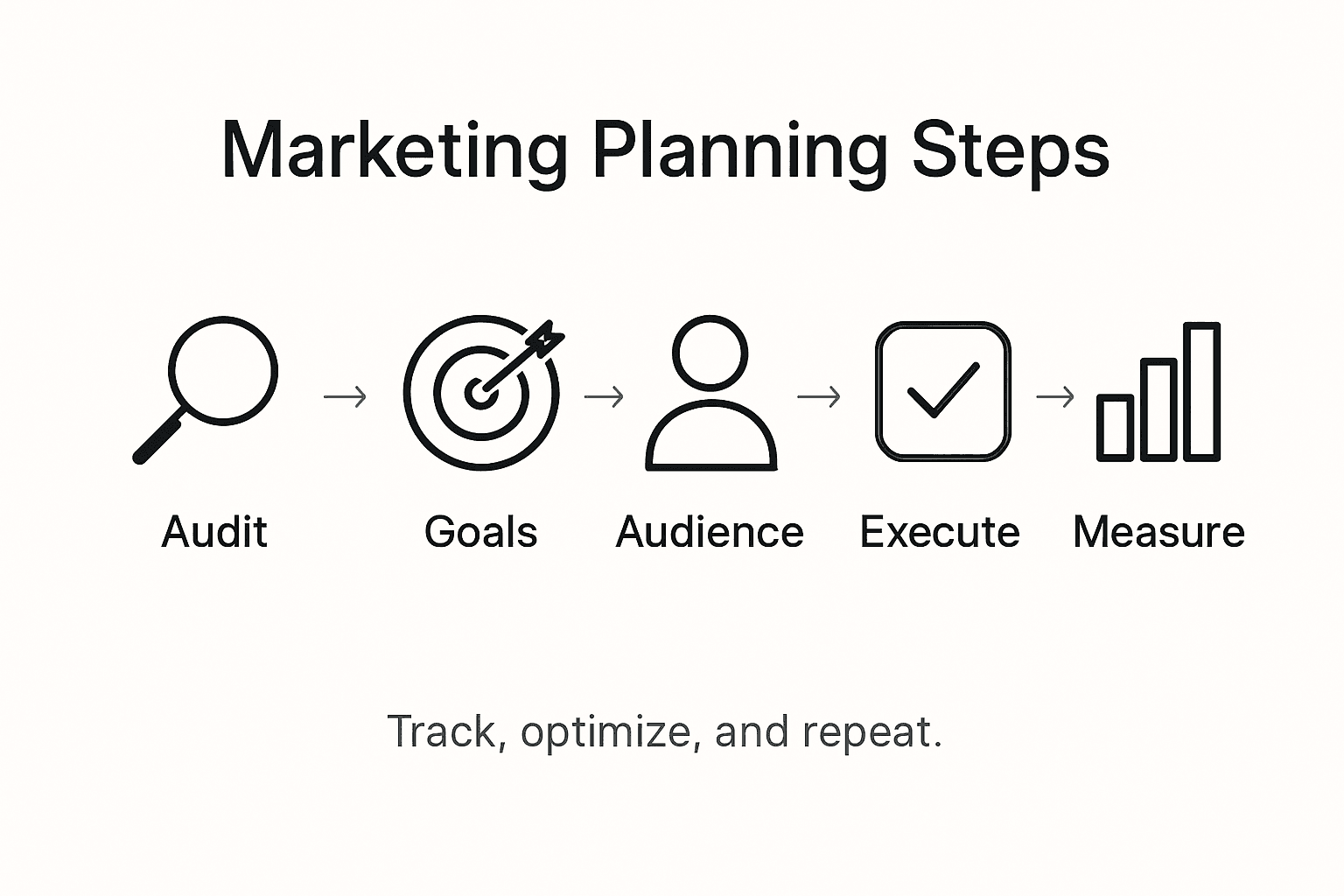
Construct your campaign framework using a comprehensive approach that covers every stage of the customer journey. Integrate multiple marketing channels with strategic content designed to engage users at different touchpoints. For each channel, define clear key performance indicators that will help you measure effectiveness. This means creating specific metrics for awareness, consideration, conversion, and retention stages that provide granular insights into campaign performance.
Ensure your strategic framework remains flexible by building in mechanisms for continuous testing and optimization. Design campaigns with modular components that can be quickly adjusted based on real time performance data. This approach allows you to pivot rapidly in response to audience feedback or emerging market trends while maintaining a consistent overall strategic direction.
Pro tip: Create a visual campaign dashboard that maps your multichannel strategy, allowing instant visibility into performance metrics and enabling quick strategic adjustments.
Step 4: Implement Targeted Actions Across Platforms
Implementing targeted actions across digital platforms requires a strategic approach that synchronizes your marketing efforts to create a cohesive and powerful customer experience. Your goal is to execute a synchronized campaign that reaches your audience through multiple touchpoints with precision and impact.
Execute digital marketing strategies by leveraging social media, search engine optimization, paid media, and mobile technologies in a coordinated manner. This means creating platform specific content that speaks directly to your audience segments while maintaining a consistent brand voice and message. For each platform search, social media, email, and display advertising develop unique yet aligned tactics that guide potential customers through their specific journey stages.

Carry out targeted marketing actions by integrating SEO, content marketing, and AI driven personalization across your chosen channels. This involves crafting platform optimized content that maximizes engagement and conversion potential. Use advanced analytics to track performance metrics in real time, allowing you to make rapid adjustments and optimize your campaign strategy continuously. Pay special attention to how different platforms interact and complement each other creating a seamless experience for your target audience.
Maintain flexibility in your implementation by setting up robust tracking and measurement systems that provide instant feedback on campaign performance. Create a centralized dashboard that aggregates data from multiple platforms, enabling you to quickly identify what is working and what needs immediate refinement. This approach ensures your marketing efforts remain agile and responsive to changing market conditions and audience behaviors.
The following table compares digital marketing channels by typical objectives and measurement focus:
| Channel | Main Objective | Key Performance Metric |
|---|---|---|
| SEO | Organic traffic growth | Search rankings, site visits |
| Social Media | Engagement & awareness | Likes, shares, comments |
| Email Marketing | Lead nurturing | Open and click-through rates |
| Paid Ads | Rapid acquisition | Conversion and ROAS |
Pro tip: Design a cross platform content matrix that maps specific messaging and creative assets to each digital channel, ensuring consistent brand storytelling and maximizing audience engagement.
Step 5: Measure Results and Optimize for Improvement
The final stage of your digital marketing planning process focuses on transforming raw performance data into actionable insights that drive continuous strategic improvement. Your objective is to develop a comprehensive evaluation framework that reveals the true impact of your marketing efforts.
Begin by conducting a thorough digital marketing audit that examines key performance indicators across awareness, consideration, and conversion stages. Identify specific metrics that directly align with your original campaign objectives. These might include conversion rates, customer acquisition costs, engagement levels, return on ad spend, and overall revenue generated. Look beyond surface level numbers to understand the deeper story behind your performance data.
Establish a robust performance measurement system that creates dynamic dashboards enabling real time insights. Break down your analysis into granular segments tracking performance across different audience groups, platforms, and campaign variations. Use statistical analysis and visualization tools to transform complex data into clear strategic recommendations. Pay special attention to identifying both high performing tactics you can scale and underperforming elements that require immediate refinement.
Develop an iterative optimization process where measurement directly informs future strategy. Create a systematic approach to testing and learning that allows you to make incremental improvements continuously. This means setting up controlled experiments, implementing changes based on data insights, and maintaining a culture of constant strategic adaptation.
Pro tip: Implement a quarterly performance review ritual that brings together key stakeholders to deeply analyze marketing metrics and collaboratively design optimization strategies.
Drive Measurable Growth with Expert Digital Marketing Strategy
Navigating the complex digital marketing planning process requires more than just setting goals and tracking metrics. If you struggle with aligning your objectives to actionable campaigns or need deeper insights into audience behavior and competitive positioning, you are not alone. This article highlights the importance of SMART objectives, multichannel campaign frameworks, and continuous optimization — all critical points that can be challenging to execute without expert guidance.
That is where AdVenture Media comes in. As a strategy-first digital advertising agency, we specialize in performance-driven marketing across platforms like Google and Meta. Our team transforms your data into clear strategies that boost lead generation, lower customer acquisition costs, and accelerate growth. Whether you want to optimize paid search, elevate social media advertising, or improve conversion rates, our proven approach is designed to deliver measurable results quickly and efficiently.
Ready to take your digital marketing to the next level and achieve the growth your business deserves? Discover how we can help you implement targeted campaigns and real-time optimization by contacting us today. Visit AdVenture Media Contact to get started and access expert insights that turn your marketing challenges into opportunities. Don’t wait—unlock your potential with a partner committed to your success.
Frequently Asked Questions
How can I assess my current digital marketing performance?
To assess your current digital marketing performance, conduct a detailed digital marketing audit. Gather data on key performance indicators like conversion rates, click-through rates, and engagement levels from different marketing channels to identify what is working and what needs improvement.
What are some specific objectives I can set for my digital marketing strategy?
You can set SMART objectives for your digital marketing strategy, such as increasing lead generation by 25% or improving customer acquisition costs. Make sure each objective is specific, measurable, achievable, relevant, and time-bound to align with your overall business goals.
How do I analyze my target audience effectively?
To analyze your target audience, use advanced digital analytics tools to create detailed buyer personas based on behavior, demographics, and engagement patterns. Segment your audience to better understand their specific needs and tailor your messaging accordingly.
What should I include in my strategic campaign framework?
Your strategic campaign framework should outline specific campaign objectives and integrate multiple marketing channels. Ensure your framework covers each stage of the customer journey and includes key performance indicators that can measure effectiveness across all channels.
How can I optimize my digital marketing efforts after measurement?
After measuring your digital marketing results, establish a continuous optimization process by identifying high-performing tactics and underperforming elements. Implement changes based on data insights and conduct controlled experiments to make incremental improvements consistently.
What is a practical way to track my digital marketing performance?
A practical way to track digital marketing performance is by creating a centralized dashboard that aggregates data from your various marketing platforms. This allows you to monitor key performance metrics in real time and make swift adjustments as needed to enhance campaign effectiveness.
Recommended


.svg.png)
Budget Optimization Leads to eCommerce Growth For Sennheiser


Performance Creative Drives 100% Increase in CTR for Luxury Homegoods Brand


AdVenture Media Helps Jive Software Decrease Cost / SQL by 827%
Request A Marketing Proposal
We'll get back to you within a day to schedule a quick strategy call. We can also communicate over email if that's easier for you.
Visit Us
New York
1074 Broadway
Woodmere, NY
Philadelphia
1429 Walnut Street
Philadelphia, PA
Florida
433 Plaza Real
Boca Raton, FL
General Inquiries
info@adventureppc.com
(516) 218-3722
AdVenture Education
Over 300,000 marketers from around the world have leveled up their skillset with AdVenture premium and free resources. Whether you're a CMO or a new student of digital marketing, there's something here for you.
OUR BOOK
We wrote the #1 bestselling book on performance advertising
Named one of the most important advertising books of all time.
buy on amazon
OUR EVENT
DOLAH '24.
Stream Now.
Over ten hours of lectures and workshops from our DOLAH Conference, themed: "Marketing Solutions for the AI Revolution"
check out dolah
The AdVenture Academy
Resources, guides, and courses for digital marketers, CMOs, and students. Brought to you by the agency chosen by Google to train Google's top Premier Partner Agencies.
Bundles & All Access Pass
Over 100 hours of video training and 60+ downloadable resources
 view bundles →
.png)


