
.svg)
Master the role of content strategy in enterprise digital ads

Most marketing leaders treat content strategy as a support function, a necessary but secondary task behind paid tactics. This misconception costs enterprises millions in lost revenue and campaign inefficiencies. Effective content strategy drives measurable ROI by aligning content precisely with buyer journeys and digital advertising goals. This article unpacks advanced strategies tailored for enterprise-level digital advertising, showing you how to transform content from an afterthought into a primary revenue driver. You will learn to integrate AI-human hybrid models, measure true impact through multi-touch attribution, and overcome common organizational barriers that prevent content strategy success.
Table of Contents
- Key takeaways
- Why content strategy is essential for enterprise digital advertising
- Core components and mechanics of effective content strategies
- Advanced strategic nuances: AI integration, multi-touch attribution, and content lifecycle
- Challenges and contrasting approaches in enterprise content strategy
- Applying content strategy insights: best practices for enterprise marketing leaders
- Boost your digital advertising performance with expert content strategy support
- FAQ
Key Takeaways
| Point | Details |
|---|---|
| Content drives revenue | Effective content strategy aligns with buyer journeys and advertising goals to turn content into a measurable revenue contributor. |
| Map content to buyer journey | Align content with awareness, consideration, and decision stages to guide prospects toward conversion. |
| Cross functional collaboration | Marketing, sales, analytics, and product teams must collaborate to ensure content addresses buyer objections and business goals. |
| Data driven measurement | Track content impact on conversions with multi touch attribution to optimize investments. |
Why content strategy is essential for enterprise digital advertising
Content strategy extends far beyond creating blog posts or social media updates. It requires mapping content to specific buyer journey stages to maximize impact at each touchpoint. When you align content with awareness, consideration, and decision phases, you create a cohesive experience that guides prospects toward conversion. This strategic alignment transforms content from a cost center into a measurable revenue contributor.
Cross-functional collaboration is the backbone of effective enterprise content strategy. Marketing teams cannot operate in isolation. You need input from sales teams who understand prospect objections, analytics teams who track performance data, and product teams who know feature benefits. This collaboration ensures content addresses real customer needs and business objectives simultaneously. Without it, content remains disconnected from actual buyer concerns.
Data-driven measurement separates successful content strategies from those that waste resources. You must track how content influences conversions, not just page views or social shares. Multi-touch attribution reveals which content pieces contribute to revenue at different journey stages. This evidence-based approach allows you to optimize investment, doubling down on high-performing content types while eliminating ineffective formats. Understanding this foundation prepares you for implementing advanced tactics that amplify results. Consider these critical elements:
- Buyer journey mapping that identifies content gaps at each stage
- Performance tracking systems that connect content to revenue outcomes
- Regular optimization cycles based on conversion data
- Cross-department alignment on content goals and success metrics
Establishing this strategic foundation enables you to leverage digital marketing strategy for ROI growth across all channels.
Core components and mechanics of effective content strategies
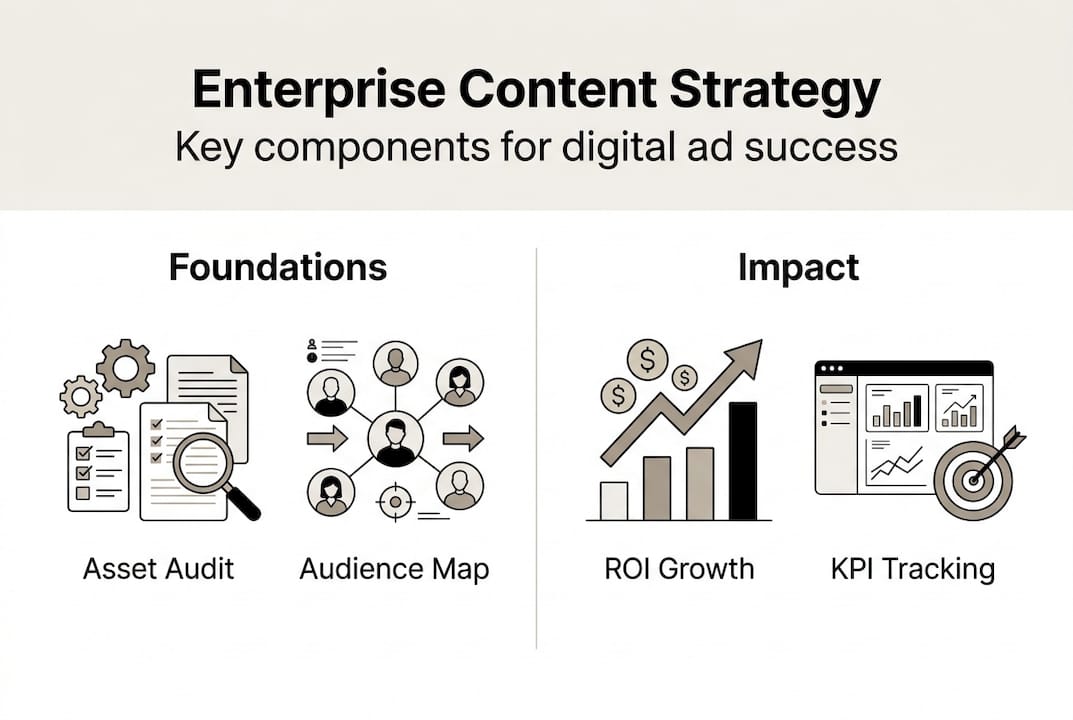
Building an effective content strategy starts with a comprehensive audit of existing assets. You need visibility into what content already exists, where gaps appear, and which pieces drive actual results. This audit reveals redundancies, outdated materials, and opportunities to repurpose high-performing content. Without this baseline understanding, you risk duplicating efforts and missing strategic opportunities.

Organizing through cross-functional teams and detailed content calendars creates the operational framework for execution. Enterprise content workflows include building teams, calendars, and production processes that streamline creation and distribution. Your calendar should map content to campaign launches, seasonal trends, and buyer journey stages. This coordination prevents last-minute scrambles and ensures consistent quality.
Implementing robust workflows transforms content production from chaotic to systematic. You need clear processes for ideation, creation, approval, publication, and promotion. Each stage requires defined roles, timelines, and quality standards. Multi-channel promotion strategies ensure content reaches your audience wherever they engage, from search engines to social platforms to email. Consider this production framework:
- Conduct quarterly content audits to identify gaps and opportunities
- Build cross-functional teams with clear roles and responsibilities
- Create detailed content calendars mapping to business objectives
- Establish production workflows with approval checkpoints
- Implement multi-channel promotion strategies for maximum reach
- Set up tracking systems for performance measurement
Tracking key performance indicators provides the feedback loop necessary for continuous improvement. Focus on metrics that matter: conversion rates, ROI attribution, engagement depth, and revenue influence. Measuring ad performance accurately reveals which content types and topics drive business results. This data guides resource allocation and strategic adjustments.
| Content component | Key activities | Success metrics |
|---|---|---|
| Audit | Asset inventory, gap analysis, performance review | Content coverage, quality scores, conversion rates |
| Team structure | Role definition, collaboration protocols | Production velocity, approval speed |
| Calendar | Journey mapping, campaign alignment, scheduling | Publishing consistency, timing accuracy |
| Workflows | Process documentation, quality gates | Time to publish, error rates |
| Promotion | Channel selection, distribution tactics | Reach, engagement, traffic quality |
| Measurement | KPI tracking, attribution modeling | Conversions, ROI, revenue influence |
Pro Tip: Schedule monthly content performance reviews with all stakeholders to maintain alignment and quickly pivot based on results. Regular reviews prevent strategy drift and ensure continuous optimization.
Mastering these mechanics creates the operational foundation for advanced tactics. Digital marketing ROI measurement becomes systematic rather than guesswork, enabling you to scale what works and eliminate what does not.
Advanced strategic nuances: AI integration, multi-touch attribution, and content lifecycle
The Barbell content strategy represents the cutting edge of enterprise content approaches. This model balances AI-optimized utility content with authentic human experiences to maximize both efficiency and emotional connection. AI handles scalable, data-driven content like product comparisons, how-to guides, and FAQ answers. Human creators focus on storytelling, thought leadership, and brand voice pieces that require nuance and authenticity. This division of labor optimizes resources while maintaining differentiation.
Generative Engine Optimization and Large Language Model Optimization are essential for AI content discoverability. As search evolves beyond traditional SEO, you must optimize content for how AI systems surface and recommend information. This includes structured data, clear hierarchies, and direct answers to common questions. Content that performs well in AI-driven search results captures traffic that traditional SEO alone misses.
Repurposing content assets maximizes ROI by extracting multiple formats from single research efforts. A comprehensive guide becomes blog posts, social media content, email sequences, video scripts, and presentation decks. This approach addresses niche topics and fast-changing subjects requiring frequent updates. Managing content lifecycle means knowing when to refresh, consolidate, or retire assets based on performance data.
Multi-touch attribution reveals true content impact across customer journeys. Single-touch attribution credits only the first or last touchpoint, missing the influence of middle-stage content. Multi-touch models show how awareness content, consideration guides, and decision-stage comparisons work together to drive conversions. This visibility allows you to invest appropriately across the entire funnel. Consider these advanced tactics:
- Deploy AI for utility content while reserving human creativity for brand storytelling
- Optimize content for GEO and LLMO to capture AI-driven search traffic
- Create repurposing workflows that extract maximum value from each content investment
- Implement multi-touch attribution to measure true content contribution
- Balance efficiency gains from AI with authenticity requirements for brand differentiation
| Strategy element | AI role | Human role | Combined benefit |
|---|---|---|---|
| Utility content | Generate FAQs, comparisons, guides | Review, refine, add brand voice | Scale + quality |
| Brand storytelling | Research, outline, data analysis | Write, edit, inject personality | Efficiency + authenticity |
| Optimization | GEO/LLMO technical implementation | Strategic keyword selection | Discoverability + relevance |
| Repurposing | Format conversion, basic editing | Strategic adaptation, quality control | Volume + consistency |
Pro Tip: Track content performance by format and topic to identify which types benefit most from AI assistance versus human creation. This data refines your Barbell strategy over time.
Understanding the role of AI in marketing helps you implement these hybrid models effectively. The key is avoiding over-reliance on vanity metrics like page views. Instead, prioritize ROI measurement that connects content directly to revenue outcomes.
Challenges and contrasting approaches in enterprise content strategy
Large enterprises face unique obstacles that smaller organizations avoid. Organizational silos create disconnects between marketing, sales, product, and customer success teams. Each department produces content independently, resulting in inconsistent messaging and duplicated efforts. Content approval processes involve multiple stakeholders, creating bottlenecks that delay publication and reduce agility. These structural challenges prevent rapid response to market changes and competitive threats.
The AI content flood creates a new challenge: differentiation. As AI tools democratize content creation, the volume of published content explodes. Generic, AI-generated content saturates search results and social feeds. Human-authored content with authentic brand voice becomes critical for standing out. Your audience can detect formulaic, templated content. They crave genuine insights, unique perspectives, and emotional resonance that only human creators deliver.
A fundamental debate exists between treating content as a strategic growth engine versus a volume game. Some organizations focus on publishing frequency, believing more content equals better results. Others prioritize strategic alignment, investing deeply in fewer high-quality pieces mapped to specific business objectives. Research shows only 26-29% of enterprises achieve highly effective strategies because most lack documented, scalable approaches. Success requires choosing strategy over volume.
A documented, scalable content strategy is the key differentiator between enterprise content successes and failures.
These challenges explain why most enterprises struggle despite significant content investments. Common pitfalls include:
- Departmental silos that prevent cross-functional collaboration and consistent messaging
- Lengthy approval processes that slow publication and reduce competitive responsiveness
- Over-reliance on AI-generated content without human differentiation
- Volume-focused approaches that sacrifice strategic alignment for publishing frequency
- Lack of documented frameworks that enable scalable, repeatable success
Overcoming these obstacles requires leadership commitment to organizational change. Data-driven marketing approaches help quantify the cost of silos and slow processes, building the business case for transformation. Similarly, strategic ROI focus shifts conversations from content volume to content impact, aligning stakeholders around revenue outcomes rather than activity metrics.
Applying content strategy insights: best practices for enterprise marketing leaders
Leading organizational alignment starts with breaking down silos and fostering cross-department collaboration. You must create formal structures for marketing, sales, product, and analytics teams to coordinate content efforts. Regular cross-functional meetings, shared content calendars, and unified success metrics align everyone around common goals. This coordination eliminates redundant efforts and ensures consistent messaging across all customer touchpoints.
Integrating AI tools with human content creation harnesses both efficiency and authenticity. CMOs should prioritize AI-human hybrid models that leverage each strength appropriately. AI accelerates production of data-driven, utility content while humans focus on brand storytelling and emotional connection. This balance maintains competitive advantage as AI content becomes ubiquitous. You need clear guidelines defining when to deploy each approach.
Setting and monitoring ROI-focused, data-driven content goals aligned with buyer journeys ensures accountability. Move beyond vanity metrics like page views and social shares. Track how content influences pipeline velocity, conversion rates, and revenue attribution. Map these metrics to specific buyer journey stages so you understand which content types drive awareness, consideration, and decision outcomes. This visibility enables strategic resource allocation.
Investing in promotion budgets maximizes content reach across channels. Creating great content is insufficient if your audience never sees it. Allocate budget for paid promotion, influencer partnerships, and distribution platforms. Multi-channel promotion ensures content reaches prospects wherever they engage, from search engines to social media to industry publications. Consider this implementation framework:
- Audit current content assets and identify gaps in buyer journey coverage
- Build cross-functional content teams with clear roles and collaboration protocols
- Design production workflows that balance efficiency with quality standards
- Adopt AI tools for utility content while preserving human creativity for differentiation
- Implement multi-touch attribution to measure true content contribution to revenue
- Align KPIs with business objectives rather than activity metrics
- Establish promotion budgets and multi-channel distribution strategies
Pro Tip: Schedule quarterly content strategy reviews with executive leadership to maintain organizational commitment and secure necessary resources. Regular executive engagement prevents content strategy from becoming deprioritized during budget cycles.
These best practices transform content from a support function into a strategic revenue driver. Strategic ROI focus guides investment decisions, while AI integration accelerates execution. Data-driven approaches ensure continuous optimization based on performance evidence rather than assumptions.
Boost your digital advertising performance with expert content strategy support
Adventure PPC has a proven track record driving conversion growth through strategic content integration in digital advertising campaigns. Our approach combines data-driven insights with creative execution to deliver measurable results. Explore our Survey Money Machines case study showcasing year-over-year conversion rate growth through strategic testing and optimization. Our International Culinary Center success story demonstrates how advanced A/B testing and content strategy elevate campaign performance. These results reflect our commitment to treating content as a strategic revenue driver, not a support function. Ready to transform your enterprise content strategy? Contact Adventure PPC to discuss how we can tailor strategies that elevate your digital advertising results and drive sustainable growth.
FAQ
What is the most important role of content strategy in digital advertising?
Content strategy aligns content with buyer journey stages to drive measurable revenue and maximize digital advertising ROI. It transforms content from a support role into a core growth driver by ensuring every piece serves a specific business objective. When executed effectively, content strategy influences prospects at awareness, consideration, and decision stages, creating a cohesive path to conversion.
How can AI and human creativity work together in content strategy?
AI produces utility and scalable content quickly, handling data-driven pieces like comparisons and FAQs. Human creativity ensures authenticity and emotional connection through storytelling and thought leadership. This hybrid approach, known as the Barbell strategy, drives better engagement and ROI by leveraging each strength appropriately. The combination maintains efficiency while preserving brand differentiation in an AI-saturated content landscape.
What metrics best measure content strategy effectiveness?
Focus on conversions, multi-touch attribution, and ROI rather than page views or social shares. Metrics should tie content impact directly to revenue goals, showing how content influences pipeline velocity and deal closure. Digital marketing ROI measurement reveals which content types and topics drive actual business results, enabling strategic resource allocation. Track engagement depth and conversion rates by buyer journey stage for comprehensive visibility.
Why do some enterprises struggle with content strategy success?
Common issues include organizational silos, slow approval processes, and lack of clear documented strategy. Departmental disconnects prevent consistent messaging and create redundant efforts. Lengthy approval chains reduce agility and competitive responsiveness. Overcoming these requires leadership focus on alignment and scalable frameworks that break down barriers. Data-driven marketing approaches help quantify the cost of these challenges, building the business case for organizational transformation and strategic investment.
Recommended

.avif)

VersaDesk Stands Up To Competition, Wins Back Bottom Funnel Traffic.


$120,000 Revenue In First Month for Ecommerce Brand Launch


Advanced Retargeting Helps Illustrate Jewelry Brand's Buyer Journey
Request A Marketing Proposal
We'll get back to you within a day to schedule a quick strategy call. We can also communicate over email if that's easier for you.
Visit Us
New York
1074 Broadway
Woodmere, NY
Philadelphia
1429 Walnut Street
Philadelphia, PA
Florida
433 Plaza Real
Boca Raton, FL
General Inquiries
info@adventureppc.com
(516) 218-3722
AdVenture Education
Over 300,000 marketers from around the world have leveled up their skillset with AdVenture premium and free resources. Whether you're a CMO or a new student of digital marketing, there's something here for you.
OUR BOOK
We wrote the #1 bestselling book on performance advertising
Named one of the most important advertising books of all time.
buy on amazon
OUR EVENT
DOLAH '24.
Stream Now.
Over ten hours of lectures and workshops from our DOLAH Conference, themed: "Marketing Solutions for the AI Revolution"
check out dolah
The AdVenture Academy
Resources, guides, and courses for digital marketers, CMOs, and students. Brought to you by the agency chosen by Google to train Google's top Premier Partner Agencies.
Bundles & All Access Pass
Over 100 hours of video training and 60+ downloadable resources
 view bundles →
.png)


