
.svg)

Nearly 65 percent of American businesses invest in pay-per-click advertising to capture attention online faster than organic methods. With growing digital competition, understanding PPC management has never mattered more for brands aiming to maximize every marketing dollar. This guide breaks down what PPC management means, why it gives American companies an edge in crowded markets, and how strategic choices could instantly change your results.
Table of Contents
- Defining PPC Management and Its Purpose
- Types of PPC Campaigns and Key Platforms
- Core Processes in Effective PPC Management
- Costs, Risks, and Budget Control Factors
- Benefits of Professional Versus DIY PPC Management
Key Takeaways
| Point | Details |
|---|---|
| Effective PPC Management | Utilize strategic practices like keyword research and ad optimization to enhance campaign performance and ROI. |
| Diverse Campaign Types | Leverage various PPC types, including Search, Display, and Remarketing, to meet specific marketing goals. |
| Budget Control | Implement dynamic budget strategies and risk management techniques to optimize PPC expenditure and campaign effectiveness. |
| Professional vs. DIY | Consider professional PPC management for more efficient resource allocation and superior campaign outcomes compared to DIY approaches. |
Defining PPC Management and Its Purpose
Pay-per-click (PPC) management is a strategic digital marketing approach where businesses leverage targeted advertising models to drive immediate online visibility and measurable results. When executed effectively, PPC allows companies to bid for ad placements in search engine sponsored links, creating a direct pathway to potential customers.
PPC management encompasses a comprehensive set of practices designed to optimize digital advertising campaigns. This includes critical processes like keyword research, ad copywriting, budget allocation, and performance tracking. Advertisers pay a specific fee each time their digital advertisement receives a click, making it a performance-driven marketing strategy that offers transparent return on investment metrics.
The core purpose of PPC management is to maximize advertising efficiency by carefully selecting keywords, crafting compelling ad copy, and designing high-converting landing pages. Businesses can target specific demographics, geographic regions, and user intent, allowing for precise audience engagement. Unlike traditional advertising models, PPC provides real-time data and immediate traffic generation, enabling marketers to quickly adjust strategies based on performance insights.
Pro Tip: Start small and scale strategically. Begin with a modest budget, test different keywords and ad variations, and incrementally invest in the highest-performing campaigns to minimize risk and optimize your marketing spend.
Types of PPC Campaigns and Key Platforms
PPC advertising offers diverse campaign types across multiple digital platforms, each designed to meet specific marketing objectives and target audience segments. Comprehensive platform comparisons reveal unique targeting capabilities that enable businesses to craft highly specialized advertising strategies.
Search Advertising represents the most traditional PPC campaign type, appearing in search engine results when users enter specific keywords. Platforms like Google Ads dominate this space, allowing businesses to display text-based advertisements directly alongside organic search results. These campaigns excel at capturing high-intent audiences actively searching for products or services, making them particularly effective for immediate conversions and lead generation.
Social media platforms offer sophisticated Display and Social PPC Campaigns with remarkable targeting precision. Facebook Ads, for instance, enables advertisers to target users based on demographics, interests, behaviors, and connections. These campaigns are ideal for brand awareness, engagement, and reaching potential customers who might not be actively searching but could be interested in a product or service. Other platforms like Instagram, LinkedIn, and Twitter provide similar targeted advertising opportunities, each with unique audience characteristics and ad format options.
Remarketing Campaigns represent another powerful PPC strategy, allowing businesses to re-engage website visitors who previously interacted with their brand. These targeted advertisements follow potential customers across different websites and platforms, reinforcing brand messaging and encouraging return visits or conversions. By strategically displaying ads to users who have already shown interest, remarketing campaigns can significantly improve conversion rates and marketing efficiency.
Pro Tip: Implement cross-platform tracking and use conversion pixels to create integrated remarketing strategies that maximize your advertising reach and effectiveness across multiple digital channels.
Here is a quick comparison of major PPC campaign types and their typical marketing outcomes:
| Campaign Type | Main Objective | Target Audience | Key Example Platforms |
|---|---|---|---|
| Search Advertising | Direct conversions | High-intent searchers | Google Ads, Bing Ads |
| Display/Social PPC | Brand visibility & reach | Demographic interests | Facebook, Instagram, LinkedIn |
| Remarketing | Repeat engagement | Past site visitors | Google Display, Facebook |
Core Processes in Effective PPC Management
Effective PPC management requires a strategic and systematic approach to digital advertising that goes far beyond simple ad placement. Successful campaign execution hinges on comprehensive processes that transform raw advertising potential into measurable business growth.
Keyword Research and Selection forms the critical foundation of any PPC campaign. Marketers must identify high-value keywords that balance search volume, competition, and relevance to their specific business offerings. This process involves using advanced keyword research tools, analyzing search intent, and understanding the nuanced language potential customers use when seeking products or services. Sophisticated keyword strategies consider not just volume, but also the commercial intent behind search queries, enabling more precise targeting and higher conversion potential.

Continuous Performance Monitoring and Optimization represents the dynamic heart of PPC management. Successful campaigns require constant analysis of key performance indicators such as click-through rates, conversion rates, cost per click, and return on ad spend. Marketers must be prepared to make real-time adjustments to ad copy, adjust bidding strategies, refine audience targeting, and pause or modify underperforming ads. This iterative approach ensures that advertising budgets are allocated efficiently and campaigns remain aligned with evolving business objectives.
Compelling Ad Creative and Landing Page Development cannot be overlooked in comprehensive PPC management. Each advertisement must be meticulously crafted to communicate unique value propositions, address customer pain points, and include clear, actionable calls to action. Equally important are the landing pages that receive advertisement traffic, which must be optimized for seamless user experience, mobile responsiveness, and conversion potential. Successful PPC campaigns create a cohesive journey from initial ad impression to final conversion, requiring careful alignment between advertisement messaging and destination page design.
Pro Tip: Implement a weekly PPC performance review process, using data-driven insights to make incremental improvements and maintain a competitive edge in your digital advertising strategy.
Costs, Risks, and Budget Control Factors
PPC advertising offers unique advantages with its precise cost management and transparent performance metrics. Immediate visibility and measurable results make it an attractive marketing strategy for businesses seeking predictable and controllable advertising investments.
Budget Allocation Strategies play a critical role in managing PPC campaign costs effectively. Businesses must develop sophisticated budgeting approaches that balance potential return on investment with financial risk. This involves setting clear daily and campaign-level spending limits, understanding the potential cost per click across different keywords, and creating flexible budget frameworks that can be dynamically adjusted based on real-time performance data. Smart budget allocation requires a nuanced understanding of industry-specific cost variations, competitive landscapes, and audience targeting precision.
Risk management represents another crucial aspect of PPC financial control. Potential risks include overspending, targeting incorrect audience segments, selecting ineffective keywords, and experiencing low conversion rates. Successful PPC management demands continuous monitoring and proactive risk mitigation strategies. This includes implementing strict budget caps, using negative keyword lists to prevent irrelevant clicks, conducting regular performance audits, and maintaining a diversified approach that prevents total reliance on a single advertising channel or campaign strategy.
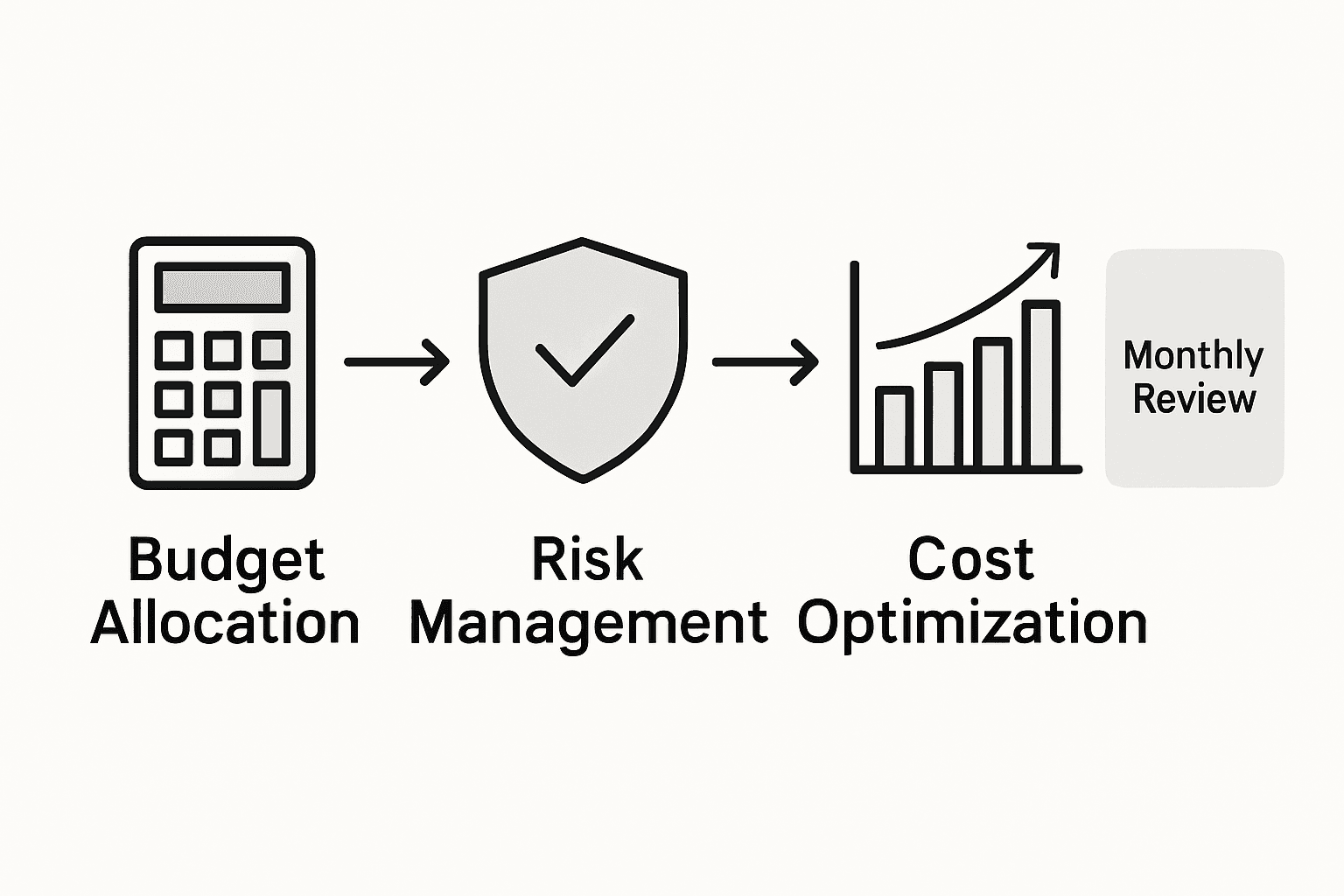
Campaign Cost Optimization involves more than simple budget control. Marketers must analyze complex metrics like cost per acquisition, lifetime customer value, and return on ad spend to truly understand the financial efficiency of their PPC efforts. Advanced optimization techniques include granular audience segmentation, sophisticated bid management, and creating highly targeted ad creatives that improve overall campaign performance while maintaining strict cost controls.
Pro Tip: Establish a monthly PPC budget review process, setting aside 10-15% of your total budget for experimental campaigns that can uncover new high-performing audience segments and advertising strategies.
Benefits of Professional Versus DIY PPC Management
Navigating the complex landscape of pay-per-click advertising requires strategic decision-making about resource allocation and expertise. Successful PPC campaigns demand careful execution of multiple sophisticated marketing elements that extend far beyond basic ad placement.
Professional PPC Management offers comprehensive expertise that individual businesses often struggle to replicate internally. Experienced agencies bring advanced technological tools, deep platform knowledge, and sophisticated strategies developed through managing multiple client campaigns. These professionals understand intricate targeting mechanisms, can rapidly adapt to platform algorithm changes, and possess nuanced insights into competitive bidding strategies. Their dedicated approach allows businesses to leverage complex targeting options, minimize wasted ad spend, and generate higher quality leads with greater efficiency.
Do-it-yourself (DIY) PPC management presents significant challenges for businesses without specialized digital marketing expertise. While initial setup might seem straightforward, maintaining high-performing campaigns requires continuous learning, constant platform updates, and advanced analytical skills. Small to medium-sized businesses often underestimate the complexity of keyword research, ad copywriting, conversion tracking, and performance optimization. Potential pitfalls include inefficient budget allocation, poor audience targeting, weak ad creatives, and missed optimization opportunities that can quickly erode advertising investments.
The financial implications of professional versus DIY management extend beyond direct advertising costs. Professional PPC managers typically deliver superior return on investment by implementing advanced tracking, sophisticated audience segmentation, and data-driven optimization techniques. They can identify and scale high-performing strategies rapidly, whereas DIY marketers might spend months learning through expensive trial and error. Additionally, professional management frees internal teams to focus on core business activities rather than getting bogged down in complex digital advertising mechanics.
The following table outlines the key differences between professional and DIY PPC management:
| Aspect | Professional Management | DIY Management |
|---|---|---|
| Expertise Level | Specialized, highly experienced | General, often limited knowledge |
| Optimization Speed | Rapid, continuous improvements | Slower, relies on trial and error |
| Resource Commitment | Saves internal team time | Demands ongoing business attention |
| ROI Potential | Generally higher with expert oversight | Often lower due to inexperience |
Pro Tip: Conduct a comprehensive audit of your current PPC performance before deciding between professional management and DIY approaches, comparing key metrics like cost per acquisition, conversion rates, and overall campaign efficiency.
Unlock Your Business Growth with Expert PPC Management
If you are struggling to navigate the complexities of PPC management such as keyword research, budget control, or campaign optimization, you are not alone. The article highlights how targeting the right audience, continuously optimizing campaigns, and managing costs are critical challenges that business owners face daily. With terms like bid strategies, remarketing, and conversion tracking thrown around, it can feel overwhelming to achieve consistent and measurable results on your own.
That is why partnering with a strategy-first agency like AdVenture Media makes all the difference. Our team specializes in performance-driven PPC campaigns across Google, Meta, and other key platforms. We focus on creating custom strategies that align perfectly with your business goals while minimizing wasted ad spend. Whether it is mastering search advertising or crafting high-converting display campaigns, we bring expertise that turns clicks into customers. Ready to take control of your PPC success? Get in touch today through our contact page to start scaling your campaigns with proven strategies. Don’t wait—every moment without expert PPC management could mean missed opportunities and unnecessary expenses.
Frequently Asked Questions
What is PPC management?
PPC management involves strategic practices to optimize digital advertising campaigns, focusing on aspects like keyword research, budget allocation, and performance tracking to drive immediate online visibility and measurable results.
What types of PPC campaigns are available?
The main types of PPC campaigns include Search Advertising, which focuses on direct conversions from high-intent searchers; Display and Social PPC, aimed at brand visibility and engagement; and Remarketing Campaigns, which target previous website visitors to encourage re-engagement.
How can businesses optimize their PPC budgets?
Businesses can optimize their PPC budgets by implementing budget allocation strategies that balance potential return on investment with financial risk, setting spending limits, and conducting regular performance audits to adjust budgets based on real-time data.
What are the benefits of professional PPC management compared to DIY?
Professional PPC management offers specialized expertise, rapid optimization, and higher return on investment due to advanced strategies, whereas DIY management often involves slower learning curves and potential misallocations of budget and resources.
Recommended

.avif)

VersaDesk Stands Up To Competition, Wins Back Bottom Funnel Traffic.

.svg.png)
Budget Optimization Leads to eCommerce Growth For Sennheiser


Conversion Rate Optimization Transforms SaaS Content Into Profitable Advertising Collateral
Request A Marketing Proposal
We'll get back to you within a day to schedule a quick strategy call. We can also communicate over email if that's easier for you.
Visit Us
New York
1074 Broadway
Woodmere, NY
Philadelphia
1429 Walnut Street
Philadelphia, PA
Florida
433 Plaza Real
Boca Raton, FL
General Inquiries
info@adventureppc.com
(516) 218-3722
AdVenture Education
Over 300,000 marketers from around the world have leveled up their skillset with AdVenture premium and free resources. Whether you're a CMO or a new student of digital marketing, there's something here for you.
OUR BOOK
We wrote the #1 bestselling book on performance advertising
Named one of the most important advertising books of all time.
buy on amazon
OUR EVENT
DOLAH '24.
Stream Now.
Over ten hours of lectures and workshops from our DOLAH Conference, themed: "Marketing Solutions for the AI Revolution"
check out dolah
The AdVenture Academy
Resources, guides, and courses for digital marketers, CMOs, and students. Brought to you by the agency chosen by Google to train Google's top Premier Partner Agencies.
Bundles & All Access Pass
Over 100 hours of video training and 60+ downloadable resources
 view bundles →
.png)


