
.svg)

Over eighty percent of American businesses now use programmatic advertising to reach their target audiences online. This fast-growing technology is changing the way companies of every size manage digital marketing, with powerful automation and data analysis at its core. Whether you are seeking better targeting or want to understand where your digital budget actually goes, learning how programmatic advertising works can give you a serious edge in the highly competitive American marketplace.
Table of Contents
- Defining Programmatic Advertising Technology
- Types of Programmatic Buying Methods
- How Automated Ad Auctions Work
- Key Benefits And Limitations For Marketers
- Risks, Costs, And Common Pitfalls
Key Takeaways
| Point | Details |
|---|---|
| Programmatic Advertising Automation | Programmatic advertising automates the digital ad buying process, allowing for quick and real-time transactions to connect advertisers with targeted audiences. |
| Types of Programmatic Buying Methods | Various programmatic buying methods, such as Open Exchange and Private Marketplace, offer distinct advantages for campaign strategies and inventory access. |
| Challenges and Risks | Despite its advantages, programmatic advertising also presents risks, including ad fraud and budget inefficiencies, requiring marketers to implement robust monitoring practices. |
| Ethical Considerations | Marketers must balance sophisticated targeting with consumer privacy concerns, navigating the complexities of ethical digital marketing. |
Defining Programmatic Advertising Technology
Programmatic advertising represents a revolutionary approach to digital ad purchasing, transforming how businesses connect with potential customers online. At its core, this technology automates the process of buying and selling digital advertisements, enabling advertisers to purchase ad space in less than a second.
The fundamental mechanism of programmatic advertising involves sophisticated real-time bidding platforms that facilitate instantaneous ad transactions. Whenever a user requests a web page, digital ad placeholders are populated with advertisements from the highest-bidding advertisers, creating a dynamic and highly efficient marketplace. This process relies on complex algorithms and massive datasets to match the right advertisement with the most appropriate audience at precisely the right moment.
Key components of programmatic advertising technology include:
- Real-time bidding platforms that enable instant ad space auctions
- Advanced data management systems tracking user behavior and preferences
- Automated targeting algorithms that match ads with specific audience segments
- Machine learning models continuously optimizing ad placement and performance
By leveraging data-driven decision making, programmatic advertising allows marketers to move beyond traditional broad-based advertising strategies. Instead, businesses can now precisely target their ideal customers based on intricate demographic, behavioral, and contextual signals, maximizing the efficiency and effectiveness of their digital advertising investments.
Types of Programmatic Buying Methods
Programmatic buying methods represent sophisticated strategies for digital ad purchasing, each offering unique approaches to targeting and inventory acquisition. Real-time bidding (RTB) serves as the foundational mechanism enabling advertisers to purchase ad impressions through instantaneous auctions, creating a dynamic marketplace that functions similarly to financial trading platforms.
The primary programmatic buying methods include:
- Open Exchange: A public marketplace where any advertiser can bid on available ad inventory
- Automated Guaranteed: Predetermined ad placements with specific publishers at fixed prices
- Private Marketplace: Invitation-only auctions with select publishers and premium inventory
- Preferred Deals: Negotiated rates for specific ad placements before open auction
- YouTube TrueView: Specialized video advertising method with unique engagement metrics
These programmatic buying methods offer varying levels of control, pricing flexibility, and inventory quality, allowing marketers to select the most appropriate approach for their specific campaign objectives. Open exchanges provide maximum reach but lower precision, while private marketplaces and preferred deals enable more targeted and controlled advertising environments.

Understanding the nuanced differences between these programmatic buying methods empowers marketers to develop more strategic, efficient advertising campaigns. By selecting the right approach, businesses can optimize their ad spend, improve audience targeting, and maximize the potential return on their digital advertising investments. Each method presents unique advantages, requiring careful consideration of campaign goals, budget constraints, and desired audience engagement levels.
How Automated Ad Auctions Work
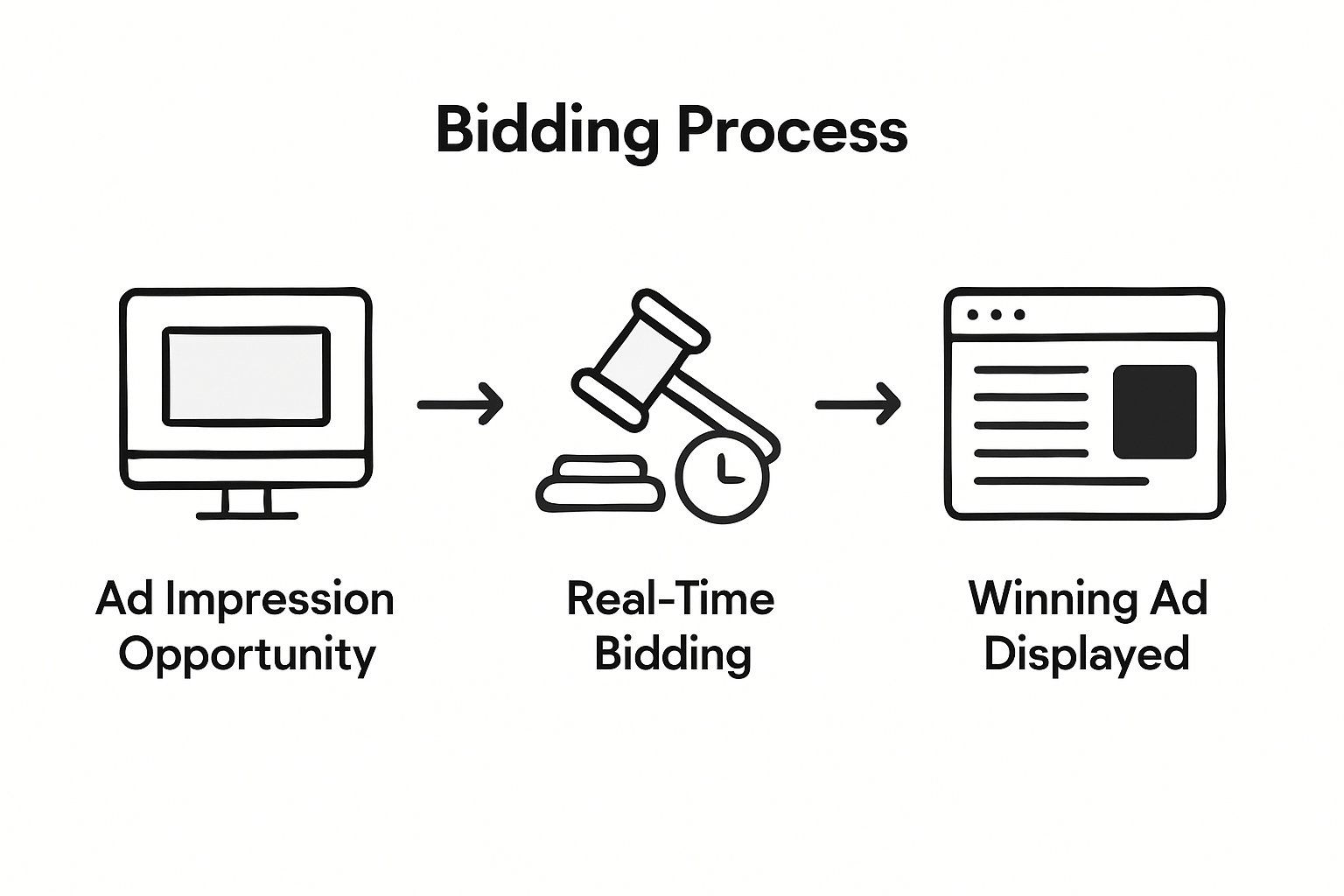
Automated ad auctions represent a groundbreaking technological approach that fundamentally transforms digital advertising transactions. In real-time bidding, online advertising buyers bid on individual ad impressions, with winning bids resulting in instantaneous ad display on publishers’ websites, creating a lightning-fast marketplace where digital advertising inventory is traded in milliseconds.
The core mechanics of automated ad auctions involve several critical components:
- Impression Evaluation: Rapid assessment of available ad space
- Bidding Algorithms: Sophisticated mathematical models determining bid strategies
- User Data Processing: Analyzing audience demographics and behavioral signals
- Instantaneous Decision Making: Completing entire auction process in under 100 milliseconds
Header bidding technology has emerged as a sophisticated method allowing publishers to simultaneously offer ad inventory to multiple demand partners, dramatically increasing competition and potential revenue. This approach enables advertisers to access premium inventory across multiple platforms, creating a more transparent and efficient marketplace.
The intricate process of automated ad auctions ultimately democratizes digital advertising, enabling businesses of all sizes to compete for valuable ad placements. By leveraging advanced algorithms, real-time data processing, and complex bidding strategies, these systems create a dynamic ecosystem where precision targeting meets instantaneous transaction capabilities. Advertisers can now optimize their campaigns with unprecedented granularity, ensuring their messages reach the most relevant audiences at the most opportune moments.
Key Benefits and Limitations for Marketers
Programmatic advertising presents marketers with a powerful toolkit for precision targeting and campaign optimization. The technology enables direct targeting of individual users, dramatically increasing the effectiveness of display advertising, transforming how businesses approach digital marketing strategies.
Key benefits for marketers include:
- Hyper-Precise Targeting: Ability to reach specific audience segments
- Real-Time Campaign Optimization: Instant performance adjustments
- Cost Efficiency: Reduced waste through algorithmic bidding
- Expanded Inventory Access: Broader range of advertising opportunities
- Detailed Performance Analytics: Granular insights into campaign performance
The growing interest in contextual advertising emerges as a strategic response to increasing concerns about personal data usage, reflecting a critical shift in digital marketing ethics. Marketers must now balance sophisticated targeting capabilities with growing consumer privacy expectations, navigating a complex landscape of technological potential and regulatory constraints.
While programmatic advertising offers unprecedented marketing capabilities, it also introduces significant challenges. Marketers must remain vigilant about potential issues like ad fraud, algorithmic bias, and transparency. Success requires a nuanced approach that combines technological sophistication with strategic human oversight, ensuring that automated systems serve broader marketing objectives while maintaining ethical standards and delivering measurable business results.
Risks, Costs, and Common Pitfalls
Programmatic advertising introduces a complex landscape of potential challenges that marketers must carefully navigate. Despite claims of transparent auction mechanisms, pricing structures can significantly impact advertiser costs, with first price payment accounting for a substantial portion of total expenditure, creating unexpected financial complications for unprepared marketing teams.
Critical risks and potential pitfalls include:
- Ad Fraud: Sophisticated bot networks generating false impressions
- Budget Inefficiency: Unoptimized bidding strategies leading to excessive spending
- Algorithmic Bias: Unintended targeting discrimination
- Brand Safety Concerns: Ads appearing alongside inappropriate content
- Data Privacy Violations: Potential breaches of consumer privacy regulations
Unchecked AI-driven contextual advertising practices can lead to manipulative ad delivery and unethical context exploitation, raising significant concerns for consumers, publishers, and advertisers alike. The potential for algorithmic systems to inadvertently create harmful or discriminatory advertising experiences demands constant vigilance and proactive management.
Successful programmatic advertising requires a sophisticated approach that balances technological capabilities with ethical considerations. Marketers must implement robust monitoring systems, maintain transparency in targeting strategies, and continuously audit their programmatic campaigns. By understanding these potential pitfalls and developing comprehensive risk mitigation strategies, businesses can harness the power of programmatic advertising while protecting their brand reputation and maintaining consumer trust.
Unlock the Full Potential of Programmatic Advertising with Expert Guidance
Navigating the complexities of programmatic advertising can be overwhelming, especially when facing challenges like ad fraud, budget inefficiency, and the need for precise real-time bidding strategies. This article highlights the critical importance of leveraging advanced algorithms and ethical campaign management to maximize your digital ad performance. If you aim to overcome these obstacles and harness hyper-precise targeting, real-time campaign optimization, and detailed performance analytics for your business, expert support is essential.
At AdVenture Media, we specialize in crafting performance-driven marketing strategies that transform your programmatic advertising challenges into measurable business growth. Our team combines deep expertise in paid search, advertising strategy, and conversion rate optimization to deliver campaigns designed for maximum efficiency and brand safety. Ready to elevate your digital advertising and avoid common pitfalls? Start your journey with us today by visiting our contact page. Discover how strategic programmatic buying methods and real-time auction navigation can benefit your brand by partnering with an agency dedicated to your success.
Frequently Asked Questions
What is programmatic advertising?
Programmatic advertising is an automated approach to buying and selling digital ads, allowing advertisers to purchase ad space in real-time through automated platforms.
How do automated ad auctions work?
Automated ad auctions operate by allowing advertisers to bid on individual ad impressions in real-time, with the highest bid winning the placement, all completed in milliseconds.
What are the key benefits of using programmatic advertising?
Key benefits include hyper-precise targeting, real-time campaign optimization, cost efficiency through reduced waste, expanded inventory access, and detailed performance analytics.
What are some common risks associated with programmatic advertising?
Common risks include ad fraud, budget inefficiency, potential algorithmic bias, brand safety concerns, and data privacy violations. It requires careful monitoring and management to mitigate these risks.
Recommended

.avif)

TurnPoint Services Revenue Soars with AdVenture's PE Playbook


Conversion Rate Optimization Transforms SaaS Content Into Profitable Advertising Collateral


$120,000 Revenue In First Month for Ecommerce Brand Launch
Request A Marketing Proposal
We'll get back to you within a day to schedule a quick strategy call. We can also communicate over email if that's easier for you.
Visit Us
New York
1074 Broadway
Woodmere, NY
Philadelphia
1429 Walnut Street
Philadelphia, PA
Florida
433 Plaza Real
Boca Raton, FL
General Inquiries
info@adventureppc.com
(516) 218-3722
AdVenture Education
Over 300,000 marketers from around the world have leveled up their skillset with AdVenture premium and free resources. Whether you're a CMO or a new student of digital marketing, there's something here for you.
OUR BOOK
We wrote the #1 bestselling book on performance advertising
Named one of the most important advertising books of all time.
buy on amazon
OUR EVENT
DOLAH '24.
Stream Now.
Over ten hours of lectures and workshops from our DOLAH Conference, themed: "Marketing Solutions for the AI Revolution"
check out dolah
The AdVenture Academy
Resources, guides, and courses for digital marketers, CMOs, and students. Brought to you by the agency chosen by Google to train Google's top Premier Partner Agencies.
Bundles & All Access Pass
Over 100 hours of video training and 60+ downloadable resources
 view bundles →
.png)


