
.svg)

Most American businesses now rely on media buying to deliver ads directly to the right screens at the right time. With over 85 percent of digital ads in the United States purchased programmatically, the pressure to master this evolving strategy is intense. Understanding the truth behind modern media buying myths can unlock smarter decisions, squeeze more value from every dollar, and sidestep costly mistakes that catch even experienced advertisers off guard.
Table of Contents
- Media Buying Defined: Core Concepts And Myths
- Media Buying Types: Direct Vs. Programmatic
- Understanding The Media Buying Process
- Cost Structures And Common Pitfalls
- Measuring Success And Roi In Media Buying
Key Takeaways
| Point | Details |
|---|---|
| Understanding Media Buying | Media buying involves negotiating and purchasing advertising space to maximize visibility and engagement through both direct and programmatic methods. |
| Role of Technology | The advent of programmatic buying has transformed the landscape, using automation and real-time data to optimize targeting and reduce costs. |
| Cost Structures | Different pricing models exist, with direct buying often being more expensive but offering higher ad viewability compared to programmatic buying. |
| Measuring Success | Key Performance Indicators (KPIs) such as Return on Ad Spend (ROAS) and engagement metrics are essential for assessing the effectiveness of media buying campaigns. |
Media Buying Defined: Core Concepts and Myths
Media buying represents a strategic approach to purchasing advertising space across digital platforms, enabling businesses to reach targeted audiences with precision and efficiency. At its core, media buying involves negotiating and purchasing advertising inventory that maximizes visibility and engagement for marketing campaigns.
The fundamental process of media buying has dramatically transformed with digital technologies. Programmatic buying allows automated media purchases through digital platforms, replacing traditional manual negotiations with sophisticated real-time bidding systems. These digital platforms include exchanges, trading desks, and demand-side platforms (DSPs) that streamline the entire advertising acquisition process.
Key characteristics of modern media buying include:
- Real-time audience targeting
- Precise demographic segmentation
- Automated bidding mechanisms
- Dynamic pricing models
- Cross-platform campaign management
Traditionally, media buying was managed by Agencies of Record (AOR) who negotiated bulk media space for clients. Today, data-driven programmatic strategies leverage big data to identify and target specific audience segments with unprecedented accuracy. This evolution means advertisers can now optimize their media investments by reaching the right people at the right time, dramatically improving campaign performance and return on investment.
Media Buying Types: Direct vs. Programmatic
Media buying encompasses two primary approaches: direct buying and programmatic buying, each with unique characteristics and strategic advantages. Understanding the nuanced differences between these methods is crucial for marketers seeking optimal advertising performance and cost efficiency.

Direct media buying represents a traditional approach where advertisers negotiate advertising spaces directly with publishers. These direct ad buys typically ensure higher ad viewability rates between 70-80%, offering superior brand safety and more controlled placement strategies. Advertisers work one-on-one with publishers, allowing for more personalized negotiations and precise targeting of specific audience segments.
In contrast, programmatic media buying leverages automation and real-time bidding platforms to purchase advertising inventory. Programmatic Direct enables advertisers to secure ad placements from publishers at fixed cost per thousand impressions (CPM), providing a more streamlined and efficient purchasing process. Key differences between direct and programmatic buying include:
-
Direct Buying:
- Manual negotiations
- Higher ad viewability
- Better brand safety
- More expensive
- Personalized publisher relationships
-
Programmatic Buying:
- Automated purchasing
- Lower ad viewability (50-60%)
- Potential ad fraud risks
- More cost-effective
- Broader audience reach
Ultimately, the choice between direct and programmatic media buying depends on specific campaign objectives, budget constraints, and desired audience targeting precision. Successful digital advertising strategies often incorporate elements from both approaches to maximize reach and effectiveness.
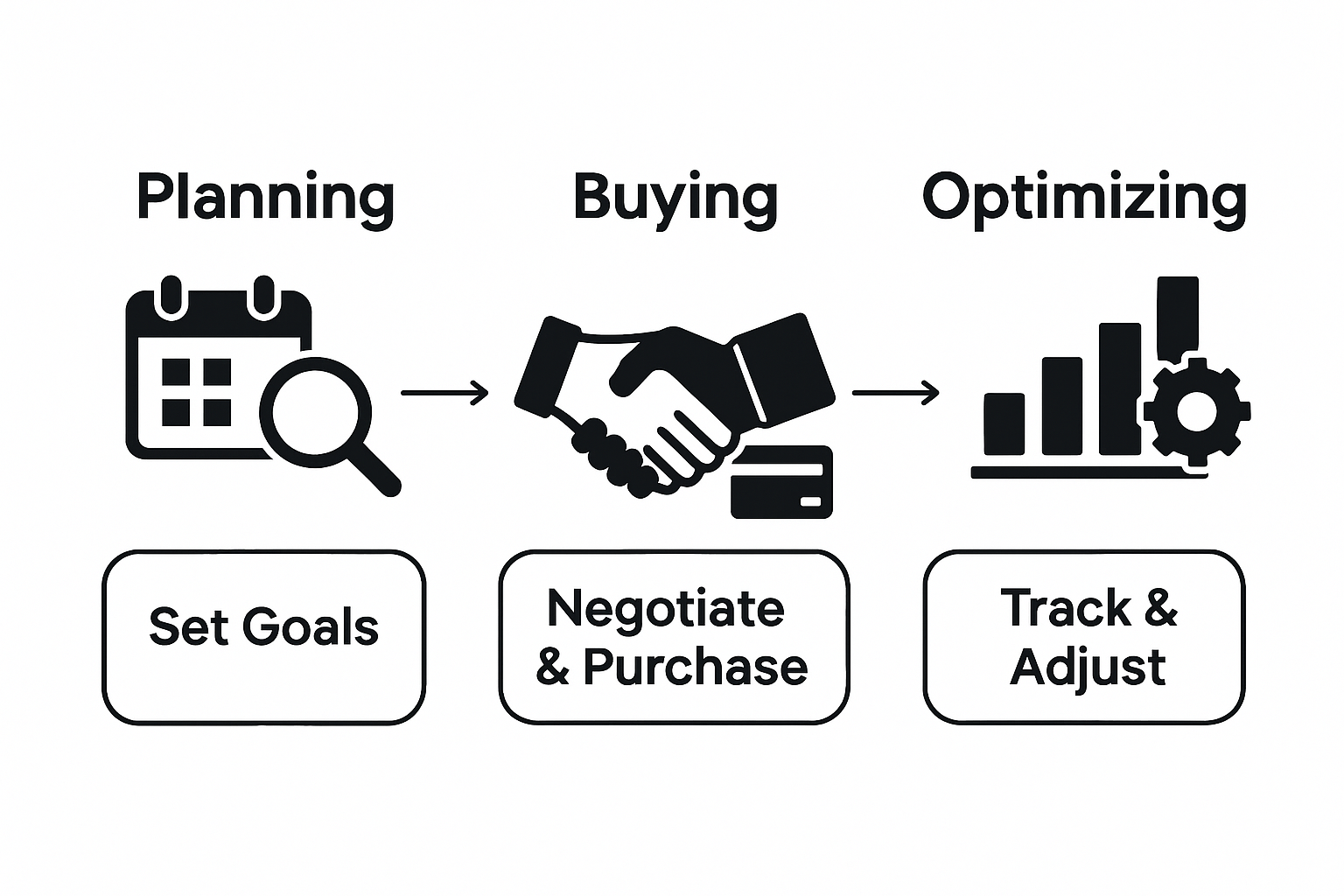
Understanding the Media Buying Process
Media buying is a strategic process that requires careful planning, negotiation, and execution across multiple advertising channels. Successful media buying goes far beyond simply purchasing ad space, involving a complex series of strategic decisions that directly impact campaign performance and return on investment.
The media buying process involves selecting appropriate channels such as television, radio, and digital platforms, each with unique attributes and audience engagement potential. These channels include linear TV, programmatic TV, connected TV, digital platforms, social media, and traditional print media, requiring marketers to develop a nuanced understanding of each medium’s strengths and limitations.
The typical media buying workflow involves several critical stages:
-
Market Research and Audience Analysis
- Identify target demographic
- Understand audience behavior
- Map consumer media consumption patterns
-
Channel Selection
- Evaluate media platform effectiveness
- Assess reach and engagement potential
- Determine cost efficiency
-
Negotiation and Purchasing
- Request proposals from media vendors
- Compare pricing and placement options
- Secure optimal advertising slots
-
Campaign Deployment
- Launch advertising across selected channels
- Monitor real-time performance metrics
- Make data-driven adjustments
-
Performance Tracking
- Analyze key performance indicators
- Measure return on advertising spend
- Generate comprehensive campaign reports
Modern media buying increasingly relies on data analytics and technological platforms to optimize advertising investments. A successful media buying process integrates automated tools with strategic human decision-making, allowing marketers to create more targeted, efficient, and responsive advertising campaigns.
Cost Structures and Common Pitfalls
Media buying involves complex pricing models and potential risks that can significantly impact advertising budgets and campaign effectiveness. Understanding these nuanced cost structures and potential challenges is crucial for marketers seeking to optimize their digital advertising investments.
Direct-sold ads typically achieve higher cost per thousand impressions (CPMs) ranging from $10-$20, compared to programmatic ads which hover between $1-$5. This pricing disparity highlights the trade-offs between premium, directly negotiated advertising spaces and more automated, cost-effective programmatic options. While programmatic platforms offer lower costs and broader reach, they simultaneously introduce several critical challenges.
Key cost structures and potential pitfalls in media buying include:
Cost Structures:
-
Direct Media Buying:
- Higher CPM ($10-$20)
- Guaranteed placement quality
- More predictable inventory
- Higher production costs
-
Programmatic Media Buying:
- Lower CPM ($1-$5)
- Wider audience reach
- Automated purchasing
- Potential inventory variability
Common Pitfalls:
-
Brand Safety Risks:
- Potential ad placement in inappropriate contexts
- Reduced control over ad environment
- Possible negative brand associations
-
Ad Quality Challenges:
- Inconsistent visual standards
- Potential for disruptive or irrelevant ads
- Higher likelihood of ad fraud
Programmatic advertising requires constant vigilance about brand safety and ad quality, as platforms can sometimes place ads in unsuitable contexts, leading to potential reputation damage and wasted advertising spend. Successful media buyers must develop sophisticated strategies that balance cost efficiency with rigorous quality control measures, leveraging both technological tools and human oversight to mitigate these inherent risks.
Measuring Success and ROI in Media Buying
Return on investment (ROI) in media buying represents a critical metric that goes beyond simple revenue tracking, demanding a comprehensive approach to performance analysis. Understanding and measuring success requires sophisticated strategies that blend quantitative data with strategic insights.
Programmatic advertising enables precise measurement of campaign performance through real-time data analysis, allowing advertisers to track results across multiple channels and optimize messaging dynamically. This advanced tracking capability empowers marketers to make data-driven decisions that continuously improve advertising effectiveness.
Key Performance Indicators (KPIs) for Media Buying:
-
Financial Metrics:
- Return on Ad Spend (ROAS)
- Cost Per Acquisition (CPA)
- Total Campaign Revenue
- Profit Margin
-
Engagement Metrics:
- Click-Through Rate (CTR)
- Conversion Rate
- Time on Site
- Bounce Rate
-
Audience Metrics:
- Reach
- Impressions
- Audience Demographics
- Targeting Accuracy
Advanced Measurement Techniques:
- Multi-Touch Attribution
- Incrementality Testing
- Cohort Analysis
- Predictive Modeling
Leveraging artificial intelligence and real-time bidding facilitates efficient budget allocation and strategic planning, ultimately improving ROI by ensuring ads reach the most relevant audience at the optimal moment. Successful media buying demands a holistic approach that combines technological sophistication with strategic human insight.
Elevate Your Media Buying Strategy with Expert Guidance
Navigating the evolving landscape of media buying demands more than basic knowledge — it requires precision targeting, strategic negotiation, and real-time optimization. If you are grappling with challenges like balancing direct versus programmatic buying, managing brand safety concerns, or maximizing ROI through data-driven insights, you are not alone. Many advertisers face the complexity of choosing the right channels and cost structures to ensure every advertising dollar drives measurable results.
At AdVenture Media, we specialize in taking the complexity out of media buying by crafting performance-focused strategies across Google, Meta, and other leading platforms. Our approach blends advanced programmatic methods with hands-on, strategic oversight to safeguard your brand and amplify campaign effectiveness. Don’t settle for average ad performance when your campaigns could achieve far more. Learn how our expertise in paid search, conversion rate optimization, and social media advertising can drive tangible growth for your business.
Ready to transform your media buying process into a powerhouse of efficiency and ROI? Discover how our digital advertising strategies can make every impression count. Connect with our team and take the first step toward ad campaigns that deliver real impact — start your journey with AdVenture Media today.
Frequently Asked Questions
What is media buying?
Media buying is the process of purchasing advertising space across various platforms to effectively reach targeted audiences. It involves strategic negotiations and decisions to maximize visibility and engagement for marketing campaigns.
What are the types of media buying?
There are two primary types of media buying: direct buying and programmatic buying. Direct buying involves negotiating ads directly with publishers, while programmatic buying uses automated systems and real-time bidding to purchase ad inventory.
How does programmatic media buying work?
Programmatic media buying uses automated technologies to purchase advertising space through platforms like trading desks and demand-side platforms (DSPs). It allows advertisers to place bids in real-time and target specific audience segments with high efficiency.
What are the benefits of using data-driven media buying?
Data-driven media buying leverages big data to optimize advertising performance by precisely targeting audience segments. This approach helps maximize return on investment by ensuring ads reach the right people at the right time, improving overall campaign effectiveness.
Recommended


20% Increase in Subscribers for Forbes Magazine


$120,000 Revenue In First Month for Ecommerce Brand Launch


Conversion Rate Optimization Transforms SaaS Content Into Profitable Advertising Collateral
Request A Marketing Proposal
We'll get back to you within a day to schedule a quick strategy call. We can also communicate over email if that's easier for you.
Visit Us
New York
1074 Broadway
Woodmere, NY
Philadelphia
1429 Walnut Street
Philadelphia, PA
Florida
433 Plaza Real
Boca Raton, FL
General Inquiries
info@adventureppc.com
(516) 218-3722
AdVenture Education
Over 300,000 marketers from around the world have leveled up their skillset with AdVenture premium and free resources. Whether you're a CMO or a new student of digital marketing, there's something here for you.
OUR BOOK
We wrote the #1 bestselling book on performance advertising
Named one of the most important advertising books of all time.
buy on amazon
OUR EVENT
DOLAH '24.
Stream Now.
Over ten hours of lectures and workshops from our DOLAH Conference, themed: "Marketing Solutions for the AI Revolution"
check out dolah
The AdVenture Academy
Resources, guides, and courses for digital marketers, CMOs, and students. Brought to you by the agency chosen by Google to train Google's top Premier Partner Agencies.
Bundles & All Access Pass
Over 100 hours of video training and 60+ downloadable resources
 view bundles →
.png)


