
.svg)

Most American businesses invest heavily in online ads, yet a surprising UC Berkeley study found that switching off paid search had little impact on sales for some companies. With so much money riding on these campaigns, understanding paid search—and the myths around it—matters more than ever. Unpacking how paid search really works reveals which strategies drive results and which common assumptions can quietly drain your marketing budget.
Table of Contents
- Paid Search Defined And Common Misconceptions
- Types Of Paid Search Advertising Platforms
- How Paid Search Campaigns Operate
- Essential Strategies For Effective Paid Search
- Costs, Risks, And Alternatives To Paid Search
Key Takeaways
| Point | Details |
|---|---|
| Understanding Paid Search | Paid search allows businesses to display ads on search engines, using a pay-per-click model that hinges on ad relevance, not just bid amount. |
| Measuring Effectiveness | It’s crucial to analyze deeper metrics beyond click-through rates, such as conversion values and customer acquisition costs, to gauge advertising performance. |
| Risks of Paid Search | Be aware of potential issues like click fraud and high costs associated with competitive keywords, which can affect overall ROI. |
| Diversifying Strategies | Implement a well-rounded marketing strategy that includes both paid search and organic methods like SEO for sustainable growth. |
Paid Search Defined and Common Misconceptions
Paid search represents a strategic digital advertising method where businesses pay to display targeted advertisements on search engine results pages (SERPs). Unlike organic search rankings, paid search allows companies to purchase visibility for specific keywords, ensuring their ads appear prominently when potential customers are actively searching for related products or services. Understanding the nuanced mechanics of paid search reveals a complex advertising ecosystem that goes far beyond simple ad placement.
At its core, paid search operates on a pay-per-click (PPC) model, meaning advertisers only pay when someone actually clicks their advertisement. This approach provides a measurable and potentially cost-effective marketing strategy. However, contrary to popular belief, purchasing ad space does not automatically guarantee top placement. Search engines like Google use sophisticated algorithms that evaluate an ad’s Quality Score - a metric considering factors such as ad relevance, expected click-through rate, and landing page experience. These dynamic calculations ensure that high-quality, relevant advertisements are rewarded with better positioning.
Interestingly, research from UC Berkeley’s Haas School of Business challenges some conventional assumptions about paid search effectiveness. A comprehensive study analyzing eBay’s advertising data discovered that turning off paid search ads in certain regions did not dramatically impact sales. This suggests that many paid search clicks might originate from users who would have visited the website organically, highlighting the importance of carefully measuring and analyzing advertising performance.
Pro Tip for Search Marketers: Always track and compare your paid search performance using granular metrics beyond simple click-through rates, examining conversion values, customer acquisition costs, and long-term revenue impact to truly understand your advertising investment.
Types of Paid Search Advertising Platforms
Paid search advertising platforms represent a diverse ecosystem of digital marketing channels that enable businesses to reach potential customers through targeted online advertising. The most prominent platforms include search engines and social media networks that offer sophisticated targeting capabilities based on user keywords, interests, and search behaviors. These platforms have revolutionized how businesses connect with their target audiences by providing granular control over ad placement and audience targeting.
Search engine advertising dominates the paid search landscape, with Google Ads remaining the most significant platform. Google’s extensive reach allows businesses to display advertisements across its massive search network, including Google Search, YouTube, and partner websites. Other search engine platforms like Bing Ads and Yahoo Search Ads provide alternative channels, each offering unique audience demographics and potentially lower competition. These platforms enable businesses to display targeted advertisements on search engine results pages, allowing precise keyword targeting and demographic segmentation.

Beyond traditional search engines, social media platforms have emerged as powerful paid search advertising channels. Networks like Facebook, LinkedIn, and Instagram offer advanced targeting options that go beyond keyword searches, allowing advertisers to target users based on detailed professional, demographic, and behavioral characteristics. These platforms provide sophisticated ad formats including text, image, video, and interactive advertisements that can be precisely targeted to specific audience segments.
Pro Tip for Digital Marketers: Diversify your paid search strategy by testing multiple platforms and tracking performance metrics, recognizing that different channels may yield varying results based on your specific business niche and target audience.
Here’s a quick comparison of major paid search advertising platforms:
| Platform | Main Strength | Typical Use Case |
|---|---|---|
| Google Ads | Large reach | General consumer targeting |
| Bing Ads | Lower competition | Niche audiences, B2B markets |
| Facebook Ads | Advanced targeting | Demographic and interest-based |
| LinkedIn Ads | Professional focus | B2B, employment, networking |
| Instagram Ads | Visual engagement | Younger demographics, brands |
How Paid Search Campaigns Operate
Paid search campaigns function through a sophisticated digital advertising mechanism that transforms online search behavior into targeted marketing opportunities. These campaigns operate through a complex auction system where advertisers compete for visibility by bidding on specific keywords relevant to their business offerings. When a potential customer enters a search query matching these keywords, search engines initiate an intricate evaluation process to determine which advertisements will be displayed and in what order.
The core mechanism of paid search campaigns revolves around the pay-per-click (PPC) model, where advertisers are charged only when a user actively clicks on their advertisement. Businesses strategically select keywords related to their products or services and participate in real-time bidding auctions, with ad placement determined by multiple factors beyond just monetary bid. These factors include ad relevance, expected click-through rate, landing page quality, and historical performance metrics. This multifaceted approach ensures that high-quality, relevant advertisements are rewarded with better positioning, rather than simply allowing the highest bidder to dominate search results.
Successful paid search campaigns require continuous optimization and strategic management. Advertisers must carefully research and select keywords, craft compelling ad copy, design engaging landing pages, and continuously monitor performance metrics. The most effective campaigns leverage advanced targeting options such as geographic location, device type, time of day, and user demographics to refine their reach. Advanced marketers also utilize techniques like ad scheduling, negative keyword management, and conversion tracking to maximize their return on investment and minimize wasted advertising spend.
Pro Tip for Campaign Managers: Regularly conduct detailed keyword research and maintain a dynamic, adaptable campaign strategy that allows for quick adjustments based on real-time performance data and shifting market conditions.
Essential Strategies for Effective Paid Search
Paid search success demands a strategic and multifaceted approach that goes beyond simple keyword selection. Developing a comprehensive strategy requires meticulous keyword research that identifies precisely how potential customers search for products and services, uncovering the nuanced language and intent behind search queries. This foundational step involves understanding not just popular terms, but also long-tail keywords that represent more specific, high-conversion potential searchers.
Crafting compelling ad copy is another critical element of effective paid search campaigns. Advertisers must create messages that simultaneously satisfy search engine algorithms and resonate with human emotions and needs. Successful campaigns continuously monitor and adjust their targeting parameters to improve ad placement and conversion rates, recognizing that static strategies quickly become obsolete in the dynamic digital marketing landscape. This requires a data-driven approach that integrates performance metrics, audience insights, and ongoing experimentation.
Advanced paid search strategies also encompass sophisticated landing page optimization and conversion rate techniques. Marketers must ensure that the entire user journey from search query to website interaction is seamless and purposeful. This involves designing landing pages that directly address user intent, providing clear value propositions, minimizing friction in the conversion process, and implementing robust tracking mechanisms to understand user behavior. Sophisticated campaigns leverage advanced targeting options like device-specific optimization, geographic segmentation, and behavioral retargeting to maximize advertising efficiency and return on investment.
Pro Tip for Digital Marketers: Implement a rigorous testing framework that allows for continuous learning and optimization, treating each campaign as an opportunity to refine your understanding of audience behavior and search dynamics.
Costs, Risks, and Alternatives to Paid Search
Paid search advertising presents a complex financial landscape that requires careful strategic evaluation. A critical study by UC Berkeley revealed significant nuances in paid search effectiveness, challenging the assumption that digital advertising automatically translates to increased sales. The research demonstrated that for some businesses, paid search clicks might simply redirect traffic that would have arrived organically, potentially reducing the actual return on investment.
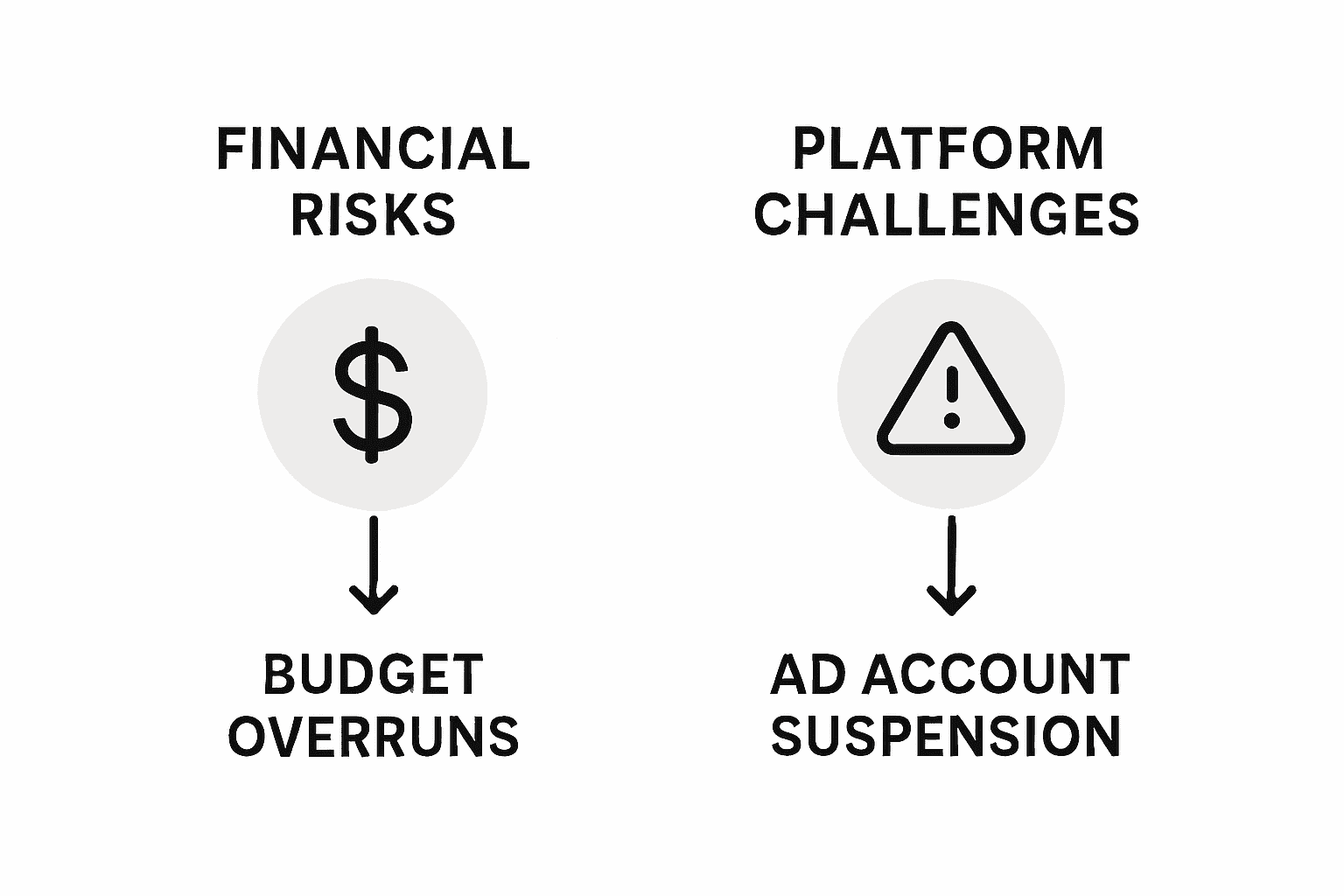
The financial risks of paid search extend beyond direct advertising expenditures. Advertisers must navigate potential challenges like click fraud, low conversion rates, and escalating costs in competitive industries. Competitive keywords can demand substantial investment, with prices fluctuating based on market demand, industry competitiveness, and search engine algorithms. Advanced marketers recognize that successful paid search requires continuous monitoring, sophisticated targeting, and a willingness to adjust strategies rapidly to maintain cost-effectiveness.
Alternative marketing approaches offer complementary or sometimes more sustainable strategies for businesses seeking digital visibility. Search engine optimization (SEO) provides a long-term approach to increasing organic search rankings without per-click expenses. Content marketing focuses on creating valuable, engaging content that naturally attracts audience attention, building credibility and trust over time. Social media marketing, email marketing, and influencer partnerships represent additional channels that can diversify digital marketing efforts and reduce reliance on paid search advertising.
Pro Tip for Marketing Strategists: Develop a holistic marketing approach that balances paid search with organic strategies, regularly analyzing performance metrics to optimize your overall digital marketing investment and minimize potential financial risks.
Here’s a summary of common risks, costs, and alternatives to paid search:
| Factor | Details | Potential Impact |
|---|---|---|
| Click Fraud | Invalid or malicious clicks | Drives up spend, wastes budget |
| High CPC in Niches | Expensive, competitive keywords | Raises customer acquisition costs |
| SEO | Increases organic reach long-term | Reduces reliance on paid ads |
| Content Marketing | Builds authority with valuable content | Supports trust, attracts audience |
Unlock the True Potential of Your Paid Search Campaigns
The article highlights key challenges businesses face with paid search such as understanding complex auction dynamics, managing high costs, and measuring real return on investment beyond clicks. If you are struggling to drive meaningful results from your paid search efforts or want to avoid wasted ad spend on keywords that do not truly convert, you are not alone. Concepts like Quality Score, pay-per-click models, and strategic keyword research are critical but difficult to master without expert guidance.
At AdVenture Media, we specialize in transforming these challenges into growth opportunities with performance-driven paid search and digital advertising strategies tailored to your business. We focus on maximizing your ROI by optimizing your Google and Meta ads through conversion rate optimization, creative strategy, and detailed data analysis. Our team has helped brands like Grown Brilliance and Slinger Bag achieve real measurable growth through targeted campaigns and continuous optimization.
Ready to move beyond guessing and start making your paid search campaigns truly work for you? Discover how our expert services can deliver measurable results with a strategic approach that aligns with your business goals. Take the first step by reaching out to us today at AdVenture Media Contact. Let’s build a paid search strategy that drives real value and sustainable growth.
Frequently Asked Questions
What is paid search?
Paid search is a digital advertising strategy where businesses pay to display ads on search engine results pages, targeting specific keywords related to their products or services.
How does the pay-per-click (PPC) model work?
In a PPC model, advertisers only pay when a user clicks on their ad. This allows businesses to measure the effectiveness of their advertising spend based on actual interactions rather than impressions.
What factors influence the placement of paid search ads?
Ad placement is determined by several factors, including the ad’s Quality Score, which considers relevance, expected click-through rate, and landing page experience, alongside the monetary bid in a competitive auction system.
What are some benefits of using paid search advertising?
Paid search advertising offers several advantages such as increased visibility, the ability to target specific demographics, measurable ROI, and the flexibility to adjust campaigns in real-time based on performance data.
Recommended


AdVenture Media Helps Jive Software Decrease Cost / SQL by 827%


Advanced A/B Testing Framework Results in 284% Conversion Rate Increase for Educational Institution

.png)
Optimizing for Purchases and App Installs Leads to 69% Decrease in CPA for Woodspoon
Request A Marketing Proposal
We'll get back to you within a day to schedule a quick strategy call. We can also communicate over email if that's easier for you.
Visit Us
New York
1074 Broadway
Woodmere, NY
Philadelphia
1429 Walnut Street
Philadelphia, PA
Florida
433 Plaza Real
Boca Raton, FL
General Inquiries
info@adventureppc.com
(516) 218-3722
AdVenture Education
Over 300,000 marketers from around the world have leveled up their skillset with AdVenture premium and free resources. Whether you're a CMO or a new student of digital marketing, there's something here for you.
OUR BOOK
We wrote the #1 bestselling book on performance advertising
Named one of the most important advertising books of all time.
buy on amazon
OUR EVENT
DOLAH '24.
Stream Now.
Over ten hours of lectures and workshops from our DOLAH Conference, themed: "Marketing Solutions for the AI Revolution"
check out dolah
The AdVenture Academy
Resources, guides, and courses for digital marketers, CMOs, and students. Brought to you by the agency chosen by Google to train Google's top Premier Partner Agencies.
Bundles & All Access Pass
Over 100 hours of video training and 60+ downloadable resources
 view bundles →
.png)


