
.svg)
Business Strategy for Digital Ads: A Proven Step-by-Step Guide

Most American businesses invest heavily in digital advertising yet only about 22 percent achieve measurable results that drive real growth. Setting clear and actionable campaign objectives is what separates successful advertisers from those who waste time and budget. Understanding how the right strategy impacts your bottom line will help you avoid common pitfalls and show you a smarter way to maximize return on every dollar spent.
Table of Contents
- Step 1: Define Measurable Advertising Objectives
- Step 2: Analyze Audience Data And Platform Selection
- Step 3: Develop Targeted Creative And Messaging Strategies
- Step 4: Implement Campaigns With Tracking And Automation
- Step 5: Monitor Performance And Optimize For ROI
Quick Summary
| Key Insight | Explanation |
|---|---|
| 1. Set SMART Advertising Objectives | Use the SMART criteria to create specific, measurable, achievable, relevant, and time-bound advertising goals that guide your campaign effectively. |
| 2. Analyze Audience Data Thoroughly | Combine multiple data sources to develop detailed audience profiles, ensuring your advertising targets the right consumers for better returns. |
| 3. Craft Targeted Messaging Strategies | Develop messaging that resonates deeply with segmented audiences, addressing their unique needs and fostering emotional connections to drive action. |
| 4. Implement Robust Tracking Systems | Establish advanced tracking for monitoring campaign performance, ensuring data-driven decisions enhance efficiency and return on investment. |
| 5. Continuously Optimize Performance | Maintain a focus on meaningful metrics that reflect true business outcomes, allowing ongoing adjustments that improve campaign effectiveness. |
Step 1: Define measurable advertising objectives
Defining precise advertising objectives is the strategic foundation for your digital ad campaign. When you establish clear, actionable goals, you transform abstract aspirations into quantifiable targets that guide your entire marketing approach.
Start by implementing the SMART criteria, which provides a robust framework for setting objectives that are Specific, Measurable, Achievable, Relevant, and Time-bound. For digital advertising, this means moving beyond vague goals like “increase brand awareness” to concrete targets such as “generate 500 qualified leads from Google Ads with a customer acquisition cost under $50 within the next 90 days.”
To craft effective objectives, ask yourself targeted questions: What specific business outcome are you seeking? Can you attach a numeric value to that outcome? What metrics will definitively demonstrate success? For instance, instead of aiming to “grow website traffic,” specify “increase organic website traffic by 25% through targeted search advertising campaigns within two quarters.”
Warning: Avoid setting unrealistic or overly broad objectives. Rethinking metrics requires discipline and specificity. Your goals should stretch your capabilities without becoming impossibly complex or disconnected from your core business strategy.
Once you have crystallized your advertising objectives, you will be prepared to develop a precise targeting strategy and select the appropriate advertising platforms and channels to achieve your goals.
Step 2: Analyze audience data and platform selection
Unlocking the potential of your digital advertising strategy begins with deep audience analysis and strategic platform selection. By understanding your target audience and choosing the right advertising channels, you can dramatically improve campaign performance and return on investment.

Cutting-edge research demonstrates that successful digital advertising requires a sophisticated data-driven approach to audience targeting. Marketers must leverage comprehensive data sources to build detailed audience profiles, including demographic information, online behavior, interests, and engagement patterns. This means diving beyond surface-level demographics and exploring nuanced data points that reveal genuine consumer motivations and potential interactions with your brand.
To effectively analyze your audience, start by consolidating data from multiple sources such as website analytics, social media insights, customer relationship management systems, and previous campaign performance metrics. Advanced predictive models can help you identify user segments most likely to engage with your advertising, allowing for more precise targeting and resource allocation.
Warning: Avoid the common pitfall of platform assumptions. Just because a platform works for one business does not guarantee it will work for yours. Each advertising channel has unique audience characteristics, cost structures, and engagement mechanisms. Conduct thorough platform research and consider running small test campaigns to validate your audience targeting strategy before committing significant resources.
Once you have developed a comprehensive audience profile and identified potential advertising platforms, you will be ready to design targeted ad creatives that resonate with your specific audience segments.
Step 3: Develop targeted creative and messaging strategies
Creating compelling digital advertising creative requires a strategic approach that goes far beyond superficial design elements. Your messaging must resonate deeply with your target audience while communicating a clear value proposition that drives action.
Research investigating advertising effectiveness reveals that targeted creative content significantly influences brand attitudes and perceived quality. This means your messaging must do more than simply describe product features. Instead, craft narratives that connect emotionally with specific audience segments, addressing their unique pain points, aspirations, and motivations.
To develop truly effective creative strategies, segment your audience meticulously and create tailored messaging for each group. Competitive advertising research demonstrates that strategic messaging can help you navigate complex market environments by differentiating your brand and speaking directly to distinct consumer needs. Develop multiple creative variations that speak to different audience personas, testing and refining your approach based on real performance data.
Warning: Avoid generic messaging that attempts to appeal to everyone. Creative strategies must be laser focused. Generic ads become background noise that potential customers automatically filter out. Your goal is to create messaging so specific and compelling that it feels like a personal conversation with each audience segment.
Once you have developed and tested your targeted creative strategies, you will be prepared to launch and optimize your digital advertising campaigns with precision and confidence.
Step 4: Implement campaigns with tracking and automation
Successful digital advertising requires sophisticated campaign implementation that combines intelligent tracking mechanisms with strategic automation. Your goal is to create a system that not only launches campaigns efficiently but also continuously optimizes performance with minimal manual intervention.
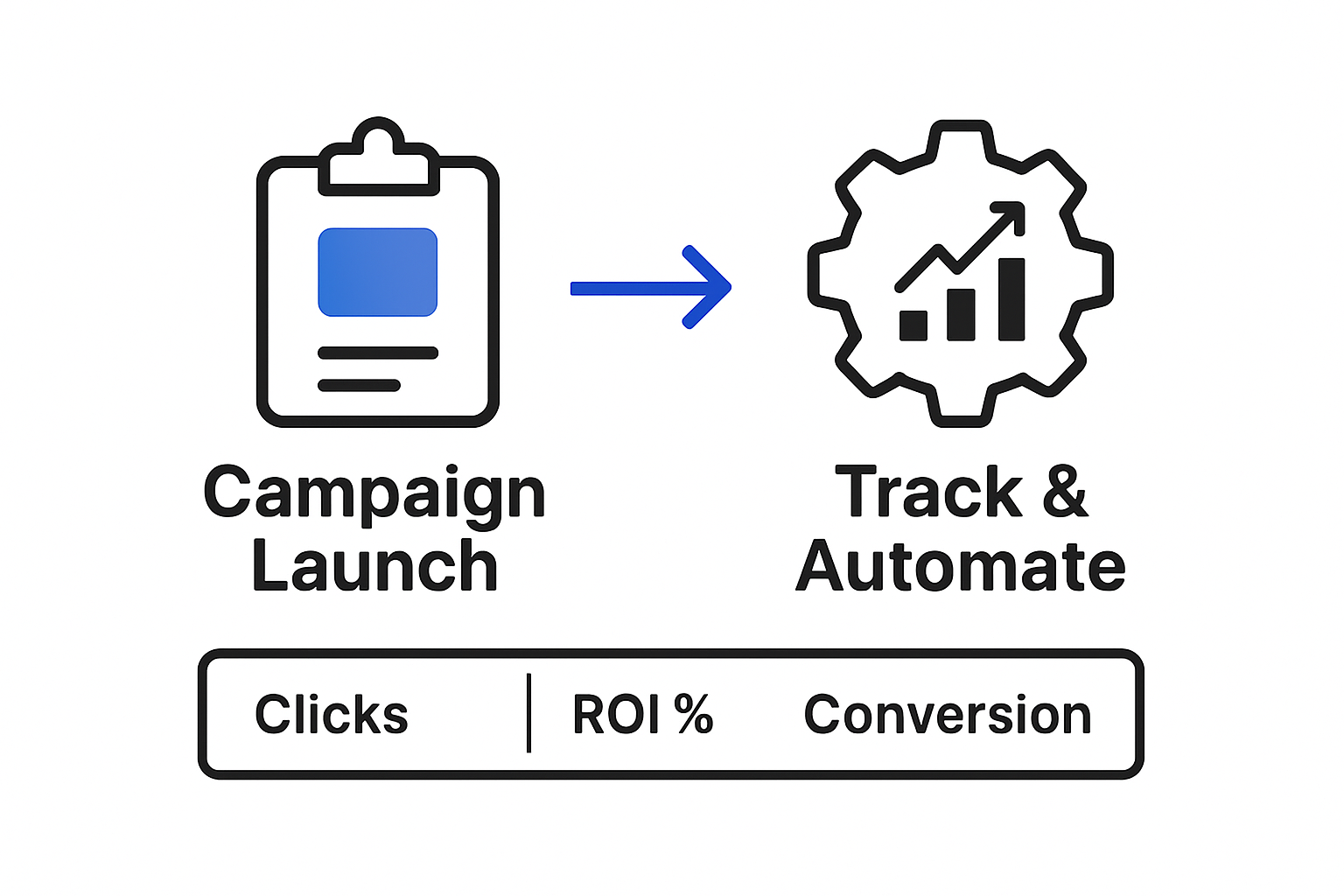
A comprehensive marketing plan serves as the foundation for effective campaign implementation, outlining clear strategies for tracking and leveraging automation tools. This means establishing robust conversion tracking across all platforms, implementing pixel technologies, and configuring advanced analytics to capture granular performance data.
Maximizing AI in PPC bidding requires a nuanced approach. Configure automated bidding strategies that align with your specific campaign objectives while maintaining human oversight. Set up conversion tracking that captures not just basic metrics but detailed customer journey insights including multi touch point interactions, lifetime value estimations, and granular conversion paths.
Warning: Automation is a tool not a complete solution. While powerful algorithmic systems can optimize campaigns rapidly, they require strategic human guidance. Regularly audit automated systems, ensuring they align with your core business objectives and do not drift into inefficient spending patterns.
Once your tracking and automation infrastructure is established, you will be positioned to launch data driven campaigns that continuously learn and improve with minimal ongoing manual management.
Step 5: Monitor performance and optimize for ROI
Successful digital advertising demands continuous performance monitoring and strategic optimization. Your ultimate goal is to transform raw data into actionable insights that progressively improve campaign efficiency and return on investment.
Research investigating advertising effectiveness demonstrates that systematic performance tracking enables marketers to understand how different advertising approaches influence brand perception and customer behavior. This requires establishing a comprehensive monitoring framework that goes beyond surface level metrics and delves into nuanced performance indicators.
Competitive analysis research highlights the critical importance of adapting to dynamic market conditions through continuous performance optimization. Implement a robust analytics dashboard that tracks key performance indicators such as conversion rates, customer acquisition costs, lifetime value, and platform specific engagement metrics. Identifying the metrics that truly matter allows you to make data driven decisions that directly impact your bottom line.
Warning: Do not become overly fixated on vanity metrics that look impressive but do not translate into meaningful business outcomes. Prioritize metrics that demonstrate genuine economic impact such as return on ad spend, customer lifetime value, and net profit contribution.
Once you have established a systematic approach to performance monitoring and optimization, you will have created a powerful growth engine that continuously refines your digital advertising strategy.
Elevate Your Digital Advertising with Proven Strategy and Expert Execution
If you find yourself struggling to define measurable advertising objectives or unsure how to analyze audience data for the best platform selection you are not alone. This article highlights the critical challenges of setting SMART goals, leveraging deep audience insights, and crafting targeted creative messaging — all essential to unlocking high performance in digital ads. At AdVenture Media, we understand the frustration of vague goals and wasted ad spend.
Our performance-driven marketing strategies focus on the exact steps you need: from precise objective setting and advanced audience analytics to creative messaging that connects and continuous campaign optimization. Our expert team specializes in platforms like Google and Meta, bringing award-winning strategies and real success stories like Grown Brilliance directly to your digital campaigns. Don’t let your advertising fall short because of broad goals or ineffective automation.
Ready to build a powerful digital advertising approach that continuously improves your return on investment Act today and connect with our specialists at AdVenture Media. Start your transformation with a clear strategy-first plan and watch your business scale through targeted digital advertising crafted for measurable results. Visit Contact Us and take the first step toward mastering your business strategy for digital ads.
Frequently Asked Questions
What are measurable advertising objectives in digital ads?
Defining measurable advertising objectives involves setting specific, quantifiable targets for your campaign. For example, instead of saying “increase website traffic,” aim for “increase organic website traffic by 25% within the next two quarters.”
How can I analyze my audience data effectively for ads?
Conduct thorough analysis by consolidating data from sources like website analytics and social media insights. Create detailed audience profiles to identify user segments most likely to engage with your ads.
What elements should my ad creative focus on?
Your ad creative should communicate a clear value proposition while resonating with your target audience. Aim to craft tailored messaging for different segments, addressing their unique pain points and aspirations.
How do I implement tracking and automation in my ad campaigns?
Establish a system that includes robust conversion tracking and automated bidding strategies. Set up detailed customer journey tracking within your campaign to optimize performance with minimal manual intervention.
What key metrics should I monitor for ROI optimization?
Focus on metrics that reflect genuine business outcomes, such as return on ad spend and customer acquisition costs. Create a dashboard to track these key performance indicators regularly and adjust your strategy to improve efficiency.
How can I ensure my ad goals are realistic and achievable?
Use the SMART criteria to define your advertising objectives, ensuring they are Specific, Measurable, Achievable, Relevant, and Time-bound. For example, setting a goal to “generate 500 qualified leads within 90 days” is both clear and actionable.
Recommended


Slinger Bag becomes #1 tennis launcher in the US, with 12.6X Facebook ROAS


Global Fintech App Uses Automation To Profitably Grow Customer Base


Conversion Rate Optimization Transforms SaaS Content Into Profitable Advertising Collateral
Request A Marketing Proposal
We'll get back to you within a day to schedule a quick strategy call. We can also communicate over email if that's easier for you.
Visit Us
New York
1074 Broadway
Woodmere, NY
Philadelphia
1429 Walnut Street
Philadelphia, PA
Florida
433 Plaza Real
Boca Raton, FL
General Inquiries
info@adventureppc.com
(516) 218-3722
AdVenture Education
Over 300,000 marketers from around the world have leveled up their skillset with AdVenture premium and free resources. Whether you're a CMO or a new student of digital marketing, there's something here for you.
OUR BOOK
We wrote the #1 bestselling book on performance advertising
Named one of the most important advertising books of all time.
buy on amazon
OUR EVENT
DOLAH '24.
Stream Now.
Over ten hours of lectures and workshops from our DOLAH Conference, themed: "Marketing Solutions for the AI Revolution"
check out dolah
The AdVenture Academy
Resources, guides, and courses for digital marketers, CMOs, and students. Brought to you by the agency chosen by Google to train Google's top Premier Partner Agencies.
Bundles & All Access Pass
Over 100 hours of video training and 60+ downloadable resources
 view bundles →
.png)


