
.svg)

Nearly 80 percent of American e-commerce brands struggle to convert social media ad spend into consistent growth. For mid-level marketing managers, the pressure to deliver results keeps rising as platforms evolve and competition intensifies. Unlocking more effective social media advertising starts with clear goals, precise audience targeting, and smarter creative choices. This guide covers actionable strategies from campaign planning to ongoing optimization, helping you maximize return and outperform your peers.
Table of Contents
- Step 1: Define Campaign Goals And Target Audience
- Step 2: Select Appropriate Social Media Platforms
- Step 3: Develop Engaging Ad Creatives And Messaging
- Step 4: Set Budgets And Schedule Campaign Deployment
- Step 5: Monitor Performance And Optimize Campaigns
Quick Summary
| Key Takeaway | Explanation |
|---|---|
| 1. Define Clear Campaign Goals | Set SMART objectives for clarity and focus in your social media strategy, improving performance and alignment with business outcomes. |
| 2. Research Your Target Audience | Develop detailed customer personas using demographics and online behavior to tailor your messaging effectively to your audience. |
| 3. Choose the Right Platforms | Select social media platforms based on audience activity and campaign goals, optimizing resource allocation and engagement potential. |
| 4. Create Compelling Ad Creatives | Design visually appealing and emotionally resonant ads that speak to customer pain points, driving engagement and action. |
| 5. Monitor and Optimize Performance | Regularly track key metrics and refine campaigns to improve results continuously, leveraging insights for informed decision-making. |
Step 1: Define Campaign Goals and Target Audience
Successful social media advertising starts with crystal clear objectives and a deep understanding of your ideal customer. By precisely defining your campaign goals and target audience, you create a strategic roadmap that transforms scattered marketing efforts into focused, high-performance initiatives.
Begin by establishing SMART marketing objectives that align with your broader business outcomes. These goals should be specific, measurable, attainable, relevant, and time-bound. For instance, instead of a vague goal like “increase brand awareness,” aim for something concrete such as “increase Instagram engagement by 25% within the next quarter” or “generate 500 qualified leads through Facebook ads by year end.”
To pinpoint your target audience, conduct comprehensive research that goes beyond basic demographics. Map out detailed customer personas including age, income, interests, online behaviors, and pain points. Use tools like social media insights, Google Analytics, and customer surveys to build a nuanced profile of who will most likely respond to your advertising. By understanding your audience’s motivations and challenges, you can craft messaging that resonates deeply and drives meaningful action.
Pro tip: Create a one-page audience persona document that your entire marketing team can reference, ensuring consistent messaging and targeting across all campaign touchpoints.
Step 2: Select Appropriate Social Media Platforms
Choosing the right social media platforms is a strategic decision that can make or break your advertising campaign. Your goal is to identify the digital spaces where your target audience is most active and engaged, ensuring your marketing resources are invested wisely and efficiently.
Begin by carefully analyzing platform demographics and user behaviors. Each social media platform has unique characteristics and audience segments. For example, LinkedIn works best for B2B professional services and career related content, while Instagram thrives on visual storytelling and appeals to younger demographics. Facebook offers robust targeting options for diverse age groups, and TikTok connects powerfully with Gen Z audiences through short form video content.
Consider your campaign objectives and match them with platform strengths. If you are seeking professional networking and thought leadership, LinkedIn might be optimal. For product showcasing and visual branding, Instagram and Pinterest could deliver better results. Ecommerce brands might find greater success on platforms with integrated shopping features like Facebook and Instagram. Remember that spreading your resources too thin across multiple platforms can dilute your impact. Focus on 2 3 platforms where your ideal customers are most responsive and your content can shine.
Pro tip: Create platform specific content that respects each platform’s unique culture and user expectations, maximizing engagement and avoiding a one size fits all approach.
Here is a quick comparison of major social media platforms for advertising success:
| Platform | Main Audience | Strengths | Recommended Content Format |
|---|---|---|---|
| Adults 25-54 | Targeting, shopping features | Image ads, video, carousel | |
| Teens & adults 18-35 | Visual branding, ecommerce | Stories, reels, visual posts | |
| Professionals | B2B networking, recruiting | Educational articles, sponsored ads | |
| TikTok | Gen Z & Millennials | Viral engagement, short videos | Short-form video, challenges |
| Women 25-45 | Product discovery, inspiration | Pins, boards, tutorial videos |
Step 3: Develop Engaging Ad Creatives and Messaging
Crafting compelling ad creatives is an art and science that transforms casual scrollers into interested prospects. Your mission is to design visual and verbal content that not only captures attention but also resonates deeply with your target audience, driving meaningful engagement and action.

Emotionally intelligent ad design requires understanding the psychological triggers that motivate your audience. Research shows that ads blending cognitive appeal with emotional storytelling are dramatically more effective. This means moving beyond simple product descriptions to create narratives that spark joy, curiosity, or solve a specific problem your audience experiences. Use vibrant visuals, authentic imagery, and messaging that speaks directly to your customers pain points and aspirations.
Pay close attention to platform specific creative requirements and audience expectations. What works on Instagram might fall flat on LinkedIn. Video content tends to perform exceptionally well across social platforms, offering dynamic ways to showcase your brand personality. Experiment with diverse content formats like carousels, short form videos, and interactive stories. Ensure your messaging is concise, clear, and includes a compelling call to action that guides viewers toward the next step in their customer journey.
Pro tip: Always test multiple creative variations and use platform analytics to understand which emotional and visual approaches generate the most engagement and conversions.
Step 4: Set Budgets and Schedule Campaign Deployment
Setting strategic budgets and deployment schedules is crucial for maximizing your social media advertising performance. Your goal is to allocate resources efficiently while ensuring your campaign reaches the right audience at the optimal moment.
Develop a comprehensive budgeting approach that connects directly to your specific campaign objectives and anticipated return on investment. Start by determining your total available advertising spend, then break it down proportionally across selected platforms based on audience size, engagement potential, and past performance metrics. Consider allocating a smaller percentage of your budget to experimental channels or emerging platforms while maintaining the majority of resources on proven high-performing networks.
Create a detailed content calendar that outlines precise deployment timing for each ad set. Factor in platform specific peak engagement hours, audience activity patterns, and potential seasonal variations that might impact campaign effectiveness. Implement a phased rollout strategy where you initially launch with conservative spending, monitor initial performance indicators, and then dynamically adjust budget allocation based on real time data insights. This approach allows for continuous optimization and prevents unnecessary financial waste while providing flexibility to scale successful ad variations.
Pro tip: Reserve approximately 10 to 15 percent of your total campaign budget for testing and optimization, enabling you to quickly pivot and refine your advertising strategy as you gather performance data.
Step 5: Monitor Performance and Optimize Campaigns
Successful social media advertising requires continuous performance tracking and strategic refinement. Your mission is to transform raw campaign data into actionable insights that drive ongoing improvement and maximize return on investment.
Implement a rigorous measurement cycle that goes beyond surface level metrics. Track key performance indicators such as click through rates, conversion rates, cost per acquisition, and engagement levels across different ad variations and audience segments. Use platform native analytics tools and third party tracking software to gather comprehensive performance data. Pay special attention to granular insights like demographic response patterns, time of day performance, and creative element effectiveness.
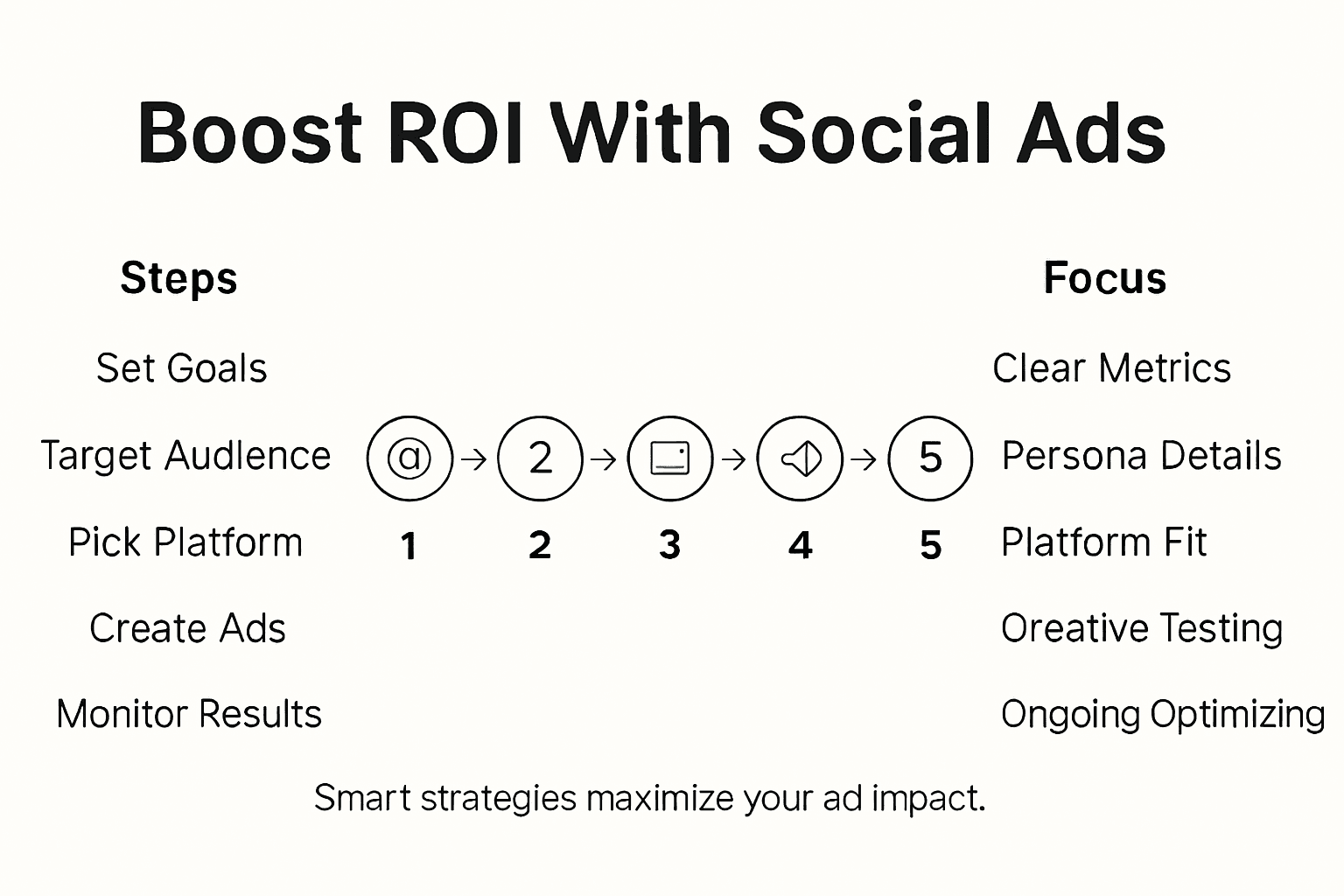
Develop a systematic optimization approach that allows for rapid iteration and improvement. Conduct regular A/B tests on ad creatives, targeting parameters, and bidding strategies to incrementally enhance campaign performance. Be prepared to reallocate budgets dynamically based on real time insights, scaling up high performing ad sets while pausing or adjusting underperforming variations. Remember that optimization is an ongoing process not a one time event. Continuously experiment, measure, learn, and refine your approach to stay ahead of changing audience behaviors and platform algorithms.
Pro tip: Schedule weekly campaign performance review sessions where you critically analyze metrics, identify trends, and make data driven optimization decisions to maintain advertising momentum.
To streamline campaign performance monitoring, use this summary of key metrics and their business impact:
| Metric | What It Measures | Business Impact |
|---|---|---|
| Click-Through Rate | Engagement levels | Indicates ad relevance |
| Conversion Rate | Lead or sale generation | Reflects campaign effectiveness |
| Cost Per Acquisition | Expense per new customer | Reveals advertising efficiency |
| Engagement Rate | Likes, shares, comments | Shows audience interaction |
| Demographic Response | Who is engaging | Refines targeting accuracy |
Elevate Your Social Media Advertising with Proven Expertise
Understanding the detailed steps to boost ROI through social media advertising can be overwhelming. Defining clear SMART goals, selecting the right platforms, crafting engaging creative, and continuously optimizing performance all require time and expert insight. Many businesses struggle with transforming these strategies into measurable results that truly impact their bottom line. If you find yourself challenged by targeting the right audience or maximizing your campaign budget effectively, you are not alone.
At AdVenture Media, we specialize in bridging these gaps by delivering performance-driven marketing strategies tailored to your unique business needs. Our team excels in managing paid search and social media advertising campaigns across platforms like Google and Meta (Facebook). We combine strategic planning with creative execution and rigorous optimization to help you achieve higher engagement and conversions. Don’t let valuable ad spend go to waste when expert guidance is just a click away. Learn more about our approach to social media advertising and discover how our proven methods have helped brands like Grown Brilliance and Slinger Bag excel.
Ready to turn your social media investment into measurable growth? Connect with us today to begin crafting a tailored strategy that aligns with your business goals and captivates your ideal audience. Reach out now through our contact page and take the first step toward maximizing your advertising impact.
Frequently Asked Questions
What are SMART marketing objectives in social media advertising?
SMART marketing objectives are Specific, Measurable, Attainable, Relevant, and Time-bound goals that guide your advertising efforts. For example, instead of saying you want to increase brand awareness, specify a target like “increase Instagram engagement by 25% within the next quarter.” This clarity helps you focus your strategies effectively.
How can I define my target audience for social media advertising?
To define your target audience, conduct comprehensive research to create detailed customer personas that include age, income, interests, and online behaviors. Gather data from social media insights and customer surveys, and summarize this information in a one-page document to ensure all team members can access and reference it consistently.
Which social media platforms should I choose for my advertising campaign?
Select social media platforms based on where your target audience is most active. For example, if your audience is primarily professionals, LinkedIn may be the best choice; if you are targeting younger users, consider Instagram or TikTok. Focus on 2 to 3 platforms to maximize your campaign’s effectiveness.
How can I create engaging ad creatives for social media?
To create engaging ad creatives, blend emotional storytelling with visually appealing design that resonates with your audience. Use compelling imagery and concise messaging that targets specific pain points, aiming for formats like videos or carousels that encourage user interaction.
What budgeting strategy should I follow for my social media advertising campaign?
Develop a budgeting approach that aligns with your campaign goals and expected return on investment. Allocate resources based on audience size and past performance, while reserving about 10 to 15 percent of your budget for testing new ad variations and optimizing based on real-time insights.
How do I monitor and optimize my social media advertising performance?
Monitor your advertising performance by tracking key metrics such as click-through rates and conversion rates. Set up A/B tests to evaluate different ad creatives and targeting strategies, and adjust your budget based on real-time data to maximize campaign effectiveness continuously.
Recommended


Unique Campaign Structure Saves Leading Logistics Company $27K Month Over Month
.avif)

VersaDesk Stands Up To Competition, Wins Back Bottom Funnel Traffic.
.webp)

Targeting High Value Customers Leads to 80% Revenue Drive for Michael Aram
Request A Marketing Proposal
We'll get back to you within a day to schedule a quick strategy call. We can also communicate over email if that's easier for you.
Visit Us
New York
1074 Broadway
Woodmere, NY
Philadelphia
1429 Walnut Street
Philadelphia, PA
Florida
433 Plaza Real
Boca Raton, FL
General Inquiries
info@adventureppc.com
(516) 218-3722
AdVenture Education
Over 300,000 marketers from around the world have leveled up their skillset with AdVenture premium and free resources. Whether you're a CMO or a new student of digital marketing, there's something here for you.
OUR BOOK
We wrote the #1 bestselling book on performance advertising
Named one of the most important advertising books of all time.
buy on amazon
OUR EVENT
DOLAH '24.
Stream Now.
Over ten hours of lectures and workshops from our DOLAH Conference, themed: "Marketing Solutions for the AI Revolution"
check out dolah
The AdVenture Academy
Resources, guides, and courses for digital marketers, CMOs, and students. Brought to you by the agency chosen by Google to train Google's top Premier Partner Agencies.
Bundles & All Access Pass
Over 100 hours of video training and 60+ downloadable resources
 view bundles →
.png)


